John A. McCone Quotes
We cannot be in a position of stimulating, approving or supporting assassination.
The statement was made with respect to the possible overthrow of President Diem of South Vietnam, who was murdered anyway during the coup.
John A. McCone, 1902-1991, Director, Central Intelligence Agency, 1963
Sourced by: Eigen's Political and Historical Quotations

See Robert F. Kennedy for a later expression of this sentiment. 1st Earl of Beaconsfield

To depose President Ngo Dinh Diem of South Vietnam Conein was one of the first American intelligence operatives in Vietnam. Diem was a creature of the Central Intelligence Agency. An anti-Communist Christian in a Buddhist county, the CIA engineered his rise to power, created his political party, provided him with cash to bribe other Vietnamese politicians, and paid for all the propaganda so he would “win” the Presidential elections. However, he abused the Buddhists, was thoroughly corrupt and ran a corrupt administration, but worst of all from the American point of view, he was unable to motivate the South Vietnamese population to fight the Communists. He reached the point where he was more of a liability, and the CIA, through Conein, engineered a coup d’etat to remove him from power and replace him with a President more to our liking. Though not planned that way, the South Vietnam military officers who we backed in the coup, then murdered Diem, who although ineffective and unsuccessful, had been a friend and ally of the United States. Even President Kennedy felt badly about the outcome. See {634539}.

The motivations and willingness to die of the suicide bomber is not unique to Islamic terrorists. On occasion our CIA has used the technique. Official CIA instructions on “lost assassination” were distributed within the agency and sometimes to our “allies” who we were training.


The meeting was about the Congo. Patrice Lumumba was an extremely popular Congo leader who had just led the independence fight against Belgium and been elected Prime Minister and one of the few African leaders at the time who was not corrupt but he was a socialist. The mineral rich Katanga Province then seceded just a few weeks after Independence. Lumumba asked the UN. for supplies and trucks to allow him to keep the country together but the UN was bogged down in debate where the US thought that he might become, Russia then unilaterally offered the aid. Thinking that the Congo might become part of the Soviet Bloc, President Eisenhower called the meeting. Lumumba had not only claimed that he was not a communist but stated that Communism was just as bad as colonialism. A few weeks later the CIA engineered a coup of the Congo Military which had previously been organized and led by Colonial Belgium. The coup deposed Lumumba in favor of a corrupt incompetent Army Officer, Joseph Mobuto. Lumumba was arrested, and the UN Secretary General demanded that he be treated properly while Russia demanded that he be released as he could not have committed any crimes as he had been in office such a short time. While under "arrest" Lumumba was mysteriously murdered. The United States denied that America had anything to do with the murder. Johnson gave similar testimony under oath before the Senate Church Committee Investigating the Intelligence Agencies.


This was a time when line CIA officers would make very expansive legal decisions without necessarily consulting attorney’s and selecting specific targets for covert action without getting permission from the National Security Council and/or the President who was not even aware of some of the agency activities.


even though in this case the objective The State Department, the Defense Department and most important President Kennedy had decided to get rid of Diem. Most of the Central Intelligence Agency thought that this was a very unwise policy, because Diem was a known risk, and the people who would replace him and their talents and policies were unknown. The negatives of Diem—the facts that he, a Christian, was persecuting the majority Buddhists, was totally corrupt, and not a very good leader was less distressful to the CIA than to the President and the other agencies as the intelligence agency frequently not only tolerated “offensive” allies, but actually employed them including war criminals. Another importance of this quotation is that it shows that it was by no means certain that the CIA would always follow the orders of the President and the government policy makers. Colby, who was not the agency director at that time but was the head of the South East Bureau, was one high level official who argued that the policies should always be followed even if they were unwise or foolish. Another importance of this quotation is that it illustrate a common error that administrations are frequently forced to make: making a policy decision to eliminate a problem while not having much of an idea of what the alternative or consequence would be when the policy is implemented. The Syrian Civil War in 2013 was a good example. The Government side appeared to have used Chemical Warfare on Civilians and public opinion demanded that we do something. However, having a no-fly zone or any of the alternatives to prevent (punish) the government for the Chemical Warfare would strengthen the rebel side which was made up of numerous factions—some of which were known Islamic fundamentalist terrorists and jihadists. If the balance of power were tipped toward the rebels, the consequence for the American national interests were unknown—just as the consequence of ousting Diem was unknown and turned out to also be bad and was probably worse.

Lumumba was too socialistic for Dulles. He was not only removed from power by a covert CIA operation but the allies we selected to succeed him, then murdered him as they feared they had no one to match Lumumba’s popularity with the people.
There was a military coup in 1973 which was supported by the United States -- {640618} . Many Chilean left wingers were tortured, murdered or disappeared. Also, two American citizens in Chile were murdered at the time. This case finally brought the murderers of the Americans from the military junta to account. However, it turned out that the murders of the Americans was part of a conspiracy between the Chilean junta and United States military / intelligence officers in Santiago at the time. The American murder victims were fingered by an American Naval Captain, Ray E. Davis, as leftists and they too were killed. Captain Davis had been indicted with the two Chileans, but he died before the trial. The Chilean judge was not able to indicate how high up the decision by the American officers to have the Chileans kill leftist Americans went. One important historical aspect of this case was meaningful because when the trial was finally conducted, there was a major policy debate in the United States over the right of the American government to kill American citizens abroad and under what circumstances with most people thinking that this was a new policy issue brought about by the development of drone technology and the War on Terror. However, this judge’s release of the information showed that Americans had been previously killed before drones. One major difference is that in the War on Terror case the President, Attorney General and other officials were the major decision makers while in the 1973 case in Chile, it may have been limited to a few rabid, over-zealous, mid-level officers, acting on their own. Or perhaps the kill decision went further. The documents relating to the murders are highly classified and the government has not yet released them at the time of this quotation.

Executive Order 12333 prohibits political assassinations. The administration took the position that the prohibition did not apply to war where assassination (targeted killing) of enemy leaders is clearly permitted. The problem was that the George W. Bush Administration did not classify the “War on Terror” as a war. They didn’t want to treat captured jihadists as prisoners of war. The Obama administration also would not ask Congress for a Declaration of war, and this caused the moral, ethical, and legal ambiguity that has plagued targeted killings by drones or other means throughout the Afghan and Iraq Wars which were legally not wars.


See Banjamin Disraeli for an earlier expression of this idea.


The reference was to Iraq president Sadaam Hussein. The CIA had determined his location and to implement the George W. Bush administration’s policy of regime change, the Air Force had been ordered to send two Stealth Bombers with “bunker buster” bombs to assassinate Sadaam. The mission was completed flawlessly and both planes hit the target destroying it completely. However, it turned out that the CIA intelligence was inaccurate, and Sadaam was not at the location. This quotation is often used to illustrate the problem of believing early action reports and the fallibility of CIA intelligence at the time.
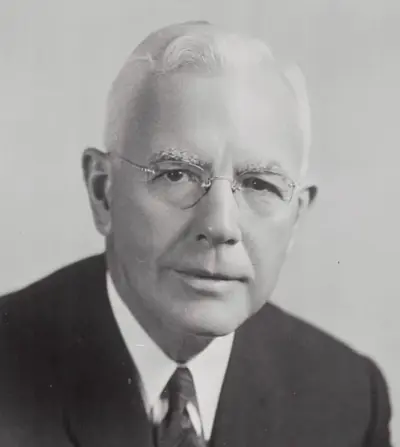
John Alexander McCone was an American businessman and politician who served as Director of Central Intelligence from 1961 to 1965, during the height of the Cold War.
