Henry T. Greely Quotes
We can remake the biosphere to be what we want, from woolly mammoths to nonbiting mosquitos. Do we want to live in nature or in Disneyland?
The then new biological technique of CRISPR allowed people without much scientific training and with very inexpensive equipment to splice part of one organism's DNA into the DNA of another, and then, in the case of an animal, implant the altered cells into the egg of a female of a related species and revive an animal close to an extinct species or create an one of an existing species but with some new characteristics. Greedy raided the issue of whether what might be possible was necessarily desirable.
Quoted in Jerry Adler, "A World Without Mosquitos" Smithsonian Magazine, June 2016
Sourced by: Eigen's Political and Historical Quotations

He was commenting on a proposal many in public health were making of using modern technology, genetic and chemical, to wipe out the mosquito population and thereby eliminate Zika and Malaria, along with other mosquito carried diseases which do terrible damage to humans worldwide. There are some who regard the extinction of a species as a major moral and ethical conundrum. Others worry about the effect on other species if there were no mosquitos. There are many other species, including some birds and fish, that feed on mosquitos and their larvae. The in turn might become endangered or also extinct.


He and others have already done it. Joyce's lab at the Scripps Research Institute was the first to produce a self-replicating in vitro system, capable of exponential growth and continuing evolution, composed entirely of RNA enzymes. Most politicians do not understand much about evolution and many actually believe that evolution has not been proven an is not what governs the development of species. And at some point these men and women will have to come to grips with this scientific reality and decide what if any restrictions there should be on the human control and manipulation of the evolution of different species.


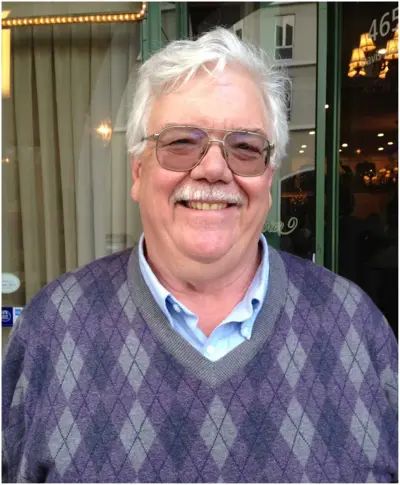
Director, Center for Law and the Biosciences; Professor (by courtesy) of Genetics, Stanford School of Medicine; Chair, Steering Committee of the Center for Biomedical Ethics; and Director, Stanford Program in Neuroscience and Society. Henry T. Greely (BA '74) specializes in the ethical, legal, and social implications of new biomedical technologies, particularly those related to neuroscience, genetics, or stem cell research. He frequently serves as an advisor on California, national, and international policy issues. He is chair of California's Human Stem Cell Research Advisory Committee, a member of the Advisory Council of the NIH's National Institute for General Medical Sciences, a member of the Committee on Science, Technology, and Law of the National Academies, a member of the Neuroscience Forum of the Institute of Medicine, and served from 2007-2010 as co-director of the Law and Neuroscience Project, funded by the MacArthur Foundation. Professor Greely chairs the steering committee for the Stanford Center for Biomedical Ethics and directs both the law school's Center for Law and the Biosciences and the Stanford Program in Neuroscience and Society. In 2007 Professor Greely was elected a fellow of the American Association for the Advancement of Science.
