Lutheran Church Quotes
We beg God’s salvation from the cunning of the Pope and the terror of the Turk.
This quotation illustrates two things. First, the enmity between the Protestants and the Catholic Church which the Lutherans had recently left. See for another anti-Catholic example of the Eastern Orthodox—{635099}. Second, the Muslim Ottoman Turks had recently conquered Constantinople and were very far from Iceland which was safe from their aggression. None the less, the hatred and fear of the Muslims had spread so far and fast in the Christian world, that even Christians who were in no danger prayed to be saved from them. Islamophobia was already well established in the middle of the 15th century.
Lutheran Church, Icelandic Prayer Book, ~1455
Sourced by: Eigen's Political and Historical Quotations

The Christian world was in a great struggle with Islam. The Sultans were trying to take over Constantinople—the seat of the Eastern Orthodox Church. The Western Catholic Church in Rome also yearned for unification but under the Pope and his Cardinals. Notaraus feared them more than the Ottomans. Howeer, it was the latter who conquered Constantinople (Byzantium) in 1453 and executed the “first family” when Notaras would not deliver his children to Sultan Mehmet as hostages for assuring “good behavior” by the Greek community.


The Turks could not take the city then, but they did 56 years later in 1453.


It is this verse that for some Muslims justifies terrorism against non-Muslims. See {584354} for a specific example. There are similar provisions in the Old Testament which a few extremely conservative Jews and Christians have used to advocate for blasphemy being a capital crime. Note that if an unbeliever repents and becomes a Muslim, he should be spared.


When the Turks defeated the Christians, the only explanation many Christians could conceive of was that God was on the side of the Turks.

Francis of Assisi

- Born:
- Nationality:
- Profession:
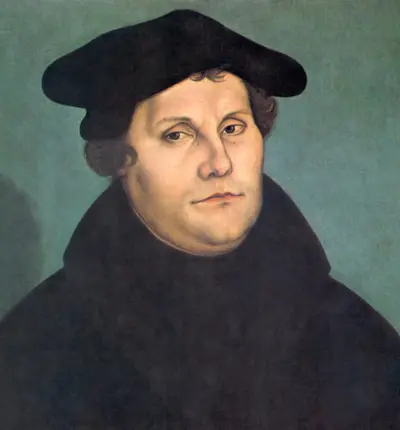
Lutheranism is one of the largest branches of Protestantism that identifies with the teachings of Martin Luther, a 16th-century German reformer whose efforts to reform the theology and practice of the church launched the Protestant Reformation. The reaction of the government and church authorities to the international spread of his writings, beginning with the 95 Theses, divided Western Christianity. During the Reformation, Lutheranism became the state religion of numerous states of Northern Europe, especially in northern Germany and the Nordic countries. Lutheran clergy became civil servants and the Lutheran churches became part of the state.
