Paul A. Volcker Quotes
We are spending a little more than we are raising each year and you wonder how long it can go on. It is too easy for us to borrow.
Paul A. Volcker, Chairman, Federal Reserve Board, Interview, The Charlie Rose Show, October 16, 2006
Sourced by: Eigen's Political and Historical Quotations

Although the Professor was often right about this technique, at the time he made this statement, the Clinton administration was actually cutting spending and using much of the revenue to pay for the deficit—just the opposite of what the Professor was worried about. It was successful and the deficit was eliminated and surpluses were projected. However the succeeding administration more closely followed the professor’s pattern and increased spending enormously for serious needs, but also cut taxes, so that we went during the Bush administration from the largest projected surplus in American history to the greatest deficit in American history.

She was very extravagant in her living style at a time when the country was in deep financial straights. Resentment of this was one of the causes of the French Revolution.

_0_thumbnail_47x47.jpg "Bill White, Mayor of Houston, Texas")
The national debt ballooned under Reagan, but the same terrible combination was implemented by President George W. Bush also.

After the Stock Market crash of 1929, Republican politicians promised "recovery is right around the corner." But La Guardia disagreed:


The Dutch King’s brother, Emperor Napoleon Bonaparte Bonaparte, insisted on Dutch contributions to his war effort in the way of Dutch troops, ships and provisions. Yet there was not enough possible revenue to pay for such a war effort. Gogel was able to introduce efficiencies in many areas but still more taxes were needed. War expenditures took all the resources of the state and progress stopped and the kingdom was almost destroyed by the economic crisis.


This is the kind of advice that Presidents have given the Congress for years. What makes this quotation noteworthy is the person who made the statement, President George W. Bush. It was made in the 7th year of his Presidency which had in those 7 years, at his urging, gone from a balanced budget and a national surplus projected, to the largest deficit of any nation in history and a projected deficit that even dwarfed that. So the irony of the quotation was that the politician who produced the largest economic burden on future generations was lecturing other politicians on the evils of doing exactly what he himself had been doing. Bush, if nothing else, was one of the most audacious politicians in this respect, though his most severe detractors claim that he did not have the intellectual perspective to even understand the hypocrisy of his quotation,


This is an example of a fascinating one-sided logic. At the time, the Chinese were, not the largest, but one of the large holders of American short term debt. It made sense to the Senator to borrow money from China to have military bands and orchestras and sports teams; it made sense to borrow money to give tax subsidies to wealthy corporations and all the other things. To him and many well off people, it certainly didn’t make sense. To the people who were unemployed or at risk of employment, or those who were empathetic with them, it made a great deal of sense.

by deficit spending and borrowing.

The United States has an unusual set of laws with respect to paying the nation’s bills. Congress must vote for the budget which authorizes and triggers the buying and spending. Then when it comes to paying for what has been bought, Congress must vote again to raise the debt ceiling so the national can pay for what Congress has already directed to be bought. Congress, in 2012 and 2013, voted to spend the money and then balked at authorizing the administration to borrow the money to pay the bills.


He and Bowles were the two leaders of the Presidential National Commission on Fiscal Responsibility and Reform. The commission recommendations to put the nation on a sound financial footing involved sacrifice by almost every sector of American society—everyone would have to give up something that they valued. So the initial reaction of almost every interest group was to oppose the plan. Over time however, there was a realization that unless the burden would be borne by some and not by others, the plan was reasonably fair. It illustrates the initial reaction of Americans to reform proposals is to retain all the benefits that they have and have others give up their benefits.
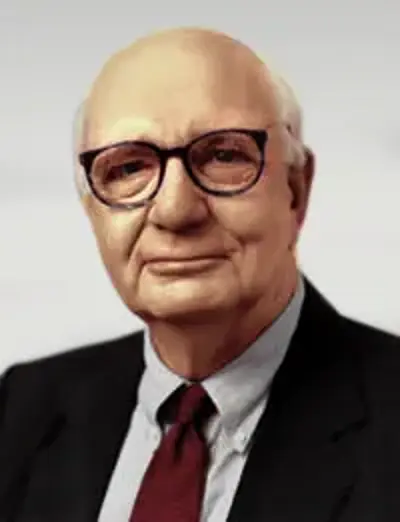
Paul Adolph Volcker Jr. was an American economist. He served two terms as the 12th Chair of the Federal Reserve under U.S. presidents Jimmy Carter and Ronald Reagan from August 1979 to August 1987. He is widely credited with having ended the high levels of inflation seen in the United States during the 1970s and early 1980s. He was the chairman of the Economic Recovery Advisory Board under President Barack Obama from February 2009 until January 2011.
