Friedrich Nietzsche Quotes
We are, indeed, not among the least contented. You, however, if your belief makes you blessed then appear to be blessed! Your faces have always been more injurious to your belief than our objections have! If these glad tidings of your Bible were written on your faces, you would not need to insist so obstinately on the authority of that book ... As things are, however, all your apologies for Christianity have their roots in your lack of Christianity; with your defense plea you inscribe your own bill of indictment.
Nietzsche, Friedrich. Untimely Meditations. Translated by R. J. Hollingdale, Cambridge University Press, 1997, p. 23.


Some of the founding fathers were deeply religious men while others were not so. Some varied in their believes at different times of their lives, and a number were not very facorable towards orthodox religion. At the time, Roman Catholic and Protestant churches were persecuting other religions throughout Europe and people were still being killed for their heretical beliefs. Most important to some of them, kings and other monarchs whom they abhorred, all at the time claimed the Divine Right of Kings and the established churches were the most important support for monarchs. At the time most organized religions were opposed to freedom of conscience and certainly opponents of separation of church and state. American churches tended to take on American values but were never given the chance to dominate the American government they way many had in Europe and the rest of the world.


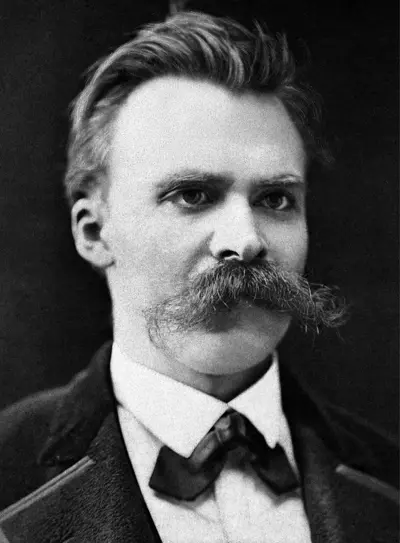
Friedrich Wilhelm Nietzsche was a German philosopher, cultural critic, composer, poet, writer, and philologist whose work has exerted a profound influence on modern intellectual history. He began his career as a classical philologist before turning to philosophy. He became the youngest person ever to hold the Chair of Classical Philology at the University of Basel in 1869 at the age of 24. Nietzsche resigned in 1879 due to health problems that plagued him most of his life; he completed much of his core writing in the following decade. In 1889, at age 44, he suffered a collapse and afterward a complete loss of his mental faculties. He lived his remaining years in the care of his mother until her death in 1897 and then with his sister Elisabeth Förster-Nietzsche. Nietzsche died in 1900.
