Thomas P.M. Barnett Quotes
Washington has a tendency to hold other powers to standards that it routinely flaunts - plain and simple.
Barnett, Thomas P.M. "The New Rules." World Politics Review, World Politics Review LLC, 2010.


Kahn was the leading scientist behind the Pakistan nuclear weapons program. However, he then was personally involved in not only selling nuclear secrets to other counties but to terrorists as well. He personally enriched himself while enabling nuclear proliferation in the world. The article was an expose of his dishonest and illegal activities. The Pakistan government was in a bind. Kahn was a national hero, the only Pakistani who had ever won the Nobel Prize in a Scientific Field. Convicted and then pardoned by the President, but he was put under house arrest and surveillance and banned from any activity involving technical assistance to others. Kahn’s religious bigotry towards Hindus as disclosed by his letter made him even more of an international pariah. See {586386} for other attacks on his critics.


Alluding to Congress's common practice of exempting itself and its members from many laws they impose on everyone else:


This is the first major history of banks written in the United States.


That particular Congress was the worst in American history in terms of passing legislation. Mainly there was philosophical gridlock between conservatives and liberals and worse between Tea Party Conservatives and mainstream conservatives. The Iraqi legislature was gridlocked religiously between Sunni and Shiite Muslims.


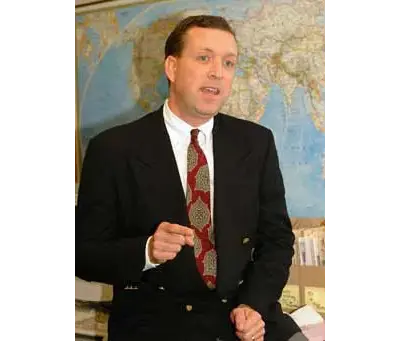
Thomas P.M. Barnett (born 1962) is an American military geostrategist and former chief analyst at Wikistrat. He developed a geopolitical theory that divided the world into "the Functioning Core" and the "Non-Integrating Gap" that made him particularly notable prior to the 2003 U.S. Invasion of Iraq when he wrote an article for Esquire in support of the military action entitled "The Pentagon's New Map" (which would later become the title of a book that would elaborate on his geopolitical theories). The central thesis of his geopolitical theory is that the connections the globalization brings between countries (including network connectivity, financial transactions, and media flows) are synonymous with those countries with stable governments, rising standards of living, and "more deaths by suicide than by murder". These countries form the Functioning Core. These regions contrast with those where globalization has not yet penetrated, which is synonymous with political repression, poverty, disease, and mass-murder, and conflict. These areas make up the Non-Integrating Gap.
