Stonewall Jackson Quotes
War means fighting. The business of the soldier is to fight. Armies are not called out to dig trenches, to throw up breastworks, to live in camps, but to find the enemy and strike him; to invade his country, and do him all possible damage in the shortest possible time. This will involve great destruction of life and property while it lasts; but such a war will of necessity be of brief continuance, and so would be an economy of life and property in the end.
Imboden, John D. "Stonewall Jackson in the Shenandoah." Battles and Leaders of the Civil War, edited by Robert Underwood Johnson and Clarence Clough Buel, vol. 2, The Century Co., 1887, p. 297.


See {613496} for the origin of the “thrashing a cannibal” phrase.

He grossly underestimated the intensity of the American patriotic feeling and the fighting ability of the Colonists. He Commanded the Royal Marines at the Battle of Bunker Hill where he was killed by a shot fired by ex-slave and Black Patriot, Peter Salem. Note the recommendation to destroy towns. At the time, that was considered improper in warfare between nations, yet it was not so clear in fighting a rebellion. However, this was against British policy and it was not a tactic employed in trying to suppress the American Revolution.


The Democrats used this quotation during the 1964 presidential campaign, in a famous TV ad with a little girl, a mushroom cloud and the announcer quoting Goldwater.


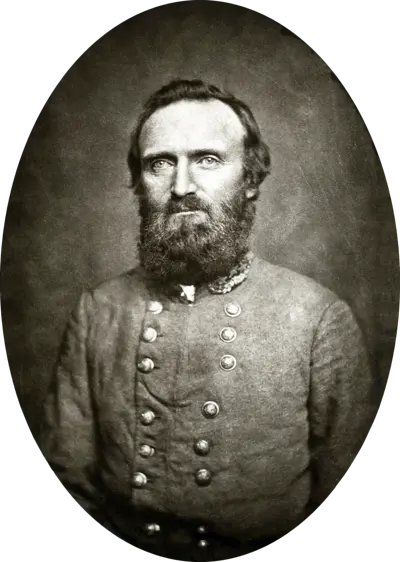
Thomas Jonathan "Stonewall" Jackson served as a Confederate general (1861–1863) during the American Civil War, and became one of the best-known Confederate commanders after General Robert E. Lee. Jackson played a prominent role in nearly all military engagements in the Eastern Theater of the war until his death, and had a key part in winning many significant battles.
