Douglas Brinkley Quotes
Walter Cronkite had a golden rule for all wartime reporters: never self-aggrandize.
Brinkley, Douglas. Cronkite. HarperCollins, 2012, p. 112.

His use of the word “character” was not meant in the general sense of a reporter’s behavior and demeanor as a human being, but rather the journalists character relative to the battle—he does not wish to kill or injure anyone but wants to communicate the events to the public. This was the “purity” to which the General referred. Actually, a number of journalists and photographers followed the suggestion and wore a white—what looks today as a full-length lab coat. See http://memory.loc.gov/pnp/cwp/4a{40000}/4a{40900}/4a{40924}r.jpg for a photo of the uniform that photographer Mathew Brady wore.


In modern times, there have been many incidents of members of the press not supporting the current war effort. Sometimes, it is the greed to get a story, and other times, it is to advocate an alternate strategy. Most often it is a belief that in democracy, only a knowledgeable public can govern the government. The administration or general cannot be relied upon to provide accurate information. Many think The Vietnam War started this problem, but it has been ongoing ever since the Revolution. In the War of 1812, with many Americans dying fighting, other Americans were critiquing the war infuriating the military and the President. Similarly, in all other wars including the Civil War. The relationship between Grant and the Press was as vitriolic as that of the Vietnam War. The war where there was the least conflict between the military and the press was WWII where press were given total access to the front lines without the controls that developed later in the Iraq War.


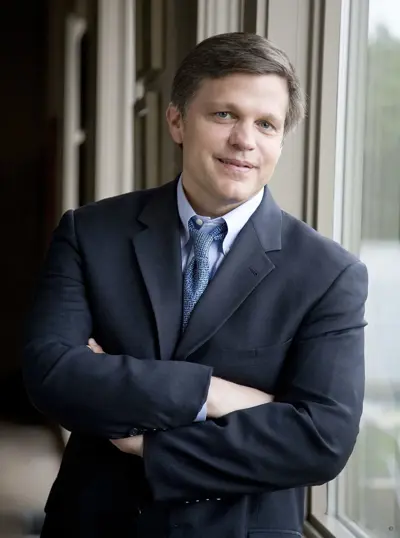
Douglas Brinkley is an American author, Katherine Tsanoff Brown Chair in Humanities and professor of history at Rice University. Brinkley is the history commentator for CNN, Presidential Historian for the New York Historical Society, and a contributing editor to the magazine Vanity Fair. He is a public spokesperson on conservation issues. He joined the faculty of Rice University as a professor of history in 2007.
