Herbert Spencer Quotes
Volumes might be written upon the impiety of the pious.
Herbert Spencer, 1820-1903, English Social Philosopher, First Principles, Pt. I, The Unknowable; Ch. V, The Reconciliation., 1862
Sourced by: Eigen's Political and Historical Quotations


When the priest died, 3 handwritten manuscripts were found written and signed by him in which he attacked religion in general and the church and the Bible in particular. His Testament was read by Voltaire and Denis Diderot among others and he was very influential in their development as opponents of organized religion. This quotation has been one of the bases of secular humanism which would then develop after he had died.


There were few reformers who had such a long, extensive, and activist career in both England and India. She began her career as a minister’s wife but was literally turned out of her house by her husband for whom she was not religiously orthodox enough. This started her religious activism which ended with her as an atheist. She led a match-girl’s strike, founded a Hindu college in India, and was even arrested for pornography in England when she wrote a book advocating birth control. She is on many lists of “Great Indians” along with Gandhi and Nehru. She was Jiddu Krishnamurti’s teacher.

Both Puritans and Quakers were persecuted and physically abused in England by the Anglican Church. The Puritans as soon as they became dominant in part of the American colonies began persecuting Quakers. The Quakers who were the majority in the Pennsylvania colony, however were tolerant of other religions. This history was another of the many reasons the Founding Fathers wanted no established church. A “scorpion” was a type of whip that was particularly painful.


Clerics of the age were often combinations of fund raisers and tax collectors.
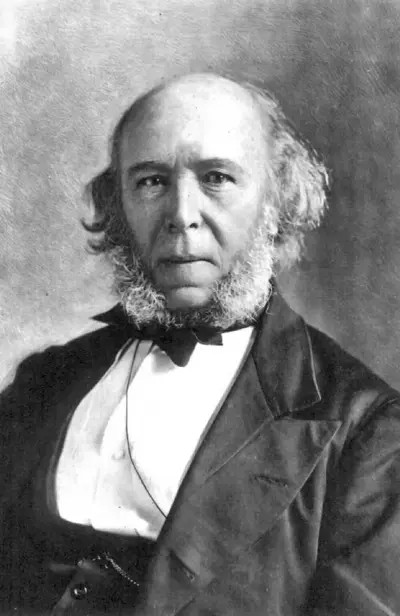
Herbert Spencer was an English philosopher, biologist, anthropologist, and sociologist famous for his hypothesis of social Darwinism whereby superior physical force shapes history. Spencer originated the expression "survival of the fittest", which he coined in Principles of Biology (1864) after reading Charles Darwin's On the Origin of Species. The term strongly suggests natural selection, yet Spencer saw evolution as extending into realms of sociology and ethics, so he also supported Lamarckism.
