Jiddu Krishnamurti Quotes
Violence is not merely killing another. It is violence when we use a sharp word, when we make a gesture to brush away a person, when we obey because there is fear. So violence isn't merely organized butchery in the name of God, in the name of society or country. Violence is much more subtle, much deeper, and we are inquiring into the very depths of violence. When you call yourself an Indian or a Muslim or a Christian or a European, or anything else, you are being violent. Do you see why it is violent? Because you are separating yourself from the rest of mankind. When you separate yourself by belief, by nationality, by tradition, it breeds violence. So a man who is seeking to understand violence does not belong to any country, to any religion, to any political party or partial system; he is concerned with the total understanding of mankind.
His most influential teacher was the English philosopher and feminist, Annie Besant, 1847-1933. See her quotations for some parallel ideas.
Jiddu Krishnamurti, 1895–1986, Indian Philosopher, Theologian, and Orator, Freedom From The Known
Sourced by: Eigen's Political and Historical Quotations


The Sultan, led 17 different military expeditions to India to spread the Muslim faith He is one of the few major conquerors of the world who was never defeated in Battle. He conquered the Lahore area and others of India that became Muslim and eventually became Pakistan. He was the first Islamic leader to bear the Title of Sultan demonstrating the separation of the civil power from the Caliph.


Sarajevo had been one of the most ethnically integrated cities in the Balkans where Serbs, Croats, and Muslims had been at war with each other throughout the former Yugoslavia.


Nationalism produced negative effects on the society ranging from aggression, ethnic cleansing, war and hatred.


He was one of the first democratic politicians of Germany who argued for rapprochement between France and Germany and may have been the first to suggest a European Union. Most of the world was very distrustful of German nationalism, and Stresemann presented one of the positive aspects of it. He died of a stroke in 1929 and the political vacuum was eventually filled by Hitler and the Nazis as the Weimar Republic was short lived. As democratic as Stresemann was, he still was preoccupied with German territorial control. See {620664}.


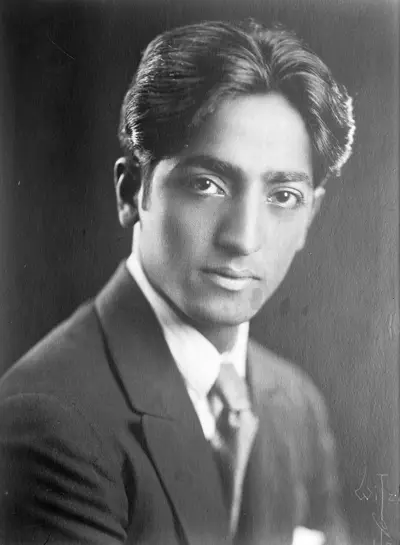
Jiddu Krishnamurti was a philosopher, speaker and writer. In his early life, he was groomed to be the new World Teacher, but later rejected this mantle and withdrew from the Theosophy organization behind it. His interests included psychological revolution, the nature of mind, meditation, inquiry, human relationships, and bringing about radical change in society. He stressed the need for a revolution in the psyche of every human being and emphasised that such revolution cannot be brought about by any external entity, be it religious, political, or social.
