Gough Whitlam Quotes
Vincent Lingiari, I solemnly hand to you these deeds as proof, in Australian law, that these lands belong to the Gurindji people and I put into your hands this piece of the earth itself as a sign that we restore them to you and your children forever.
Whitlam, Gough. Speech at the Gurindji Land Handover. 16 Aug. 1975, Wattie Creek, Northern Territory. Whitlam Institute, Western Sydney University.

While Jefferson was clear on this point, there were other forces and points of view that did not recognize Indian rights and were prepared to use force to obtain Indian lands. These, together with some Indians who made bad and sometimes corrupt bargains and treaties ceding land, produced the loss of most of the Indian land in America.


With different concepts of land ownership Europeans and Indians were at odds over purchases from the earliest times. This was the first of the many efforts to eliminate problems of contention with Native Americans over land.
The central Indian policy problem for Jefferson’s Administration was the fact that most Indians hunted for subsistence and the amount of land needed to support a hunting society was per capita much greater than an agricultural and especially an industrial one. Jefferson had no personal animosity against the Indians as many in his day did. But he perceived the need to obtain Indian lands for white agricultural use.


President-elect Kennedy had asked the poet to write and present a poem for the inaugural.


The early Zionists had an understanding of how they were then perceived by the Arabs who had been living in land that was to become Israel. Like most other parts of the world, the land of Israel has been conquered and reconquered over the years. The area had been a Jewish kingdom in the immediate centuries before the birth of Christ. They had conquered it from the tribes that had conquered it from the Egyptians who had also conquered it. Then the Romans conquered. After that there were Muslims, Christians, the Ottoman Empire, the British and finally Israel was formed. Throughout this entire history, both Arabs and Jews had lived on the land along with and under the authority of whoever was the latest conqueror. In the hundreds of years before the establishment of the state of Israel, the Arabs had been in the majority. The 20th century saw a large influx of Jews who immigrated, purchased land and settled. There had been low level conflict as the Arabs became concerned that with the immigration

The whites had constantly encroached on the Cherokee land which was too large for any reasonable patrolling by the Indians themselves. The Federal government persuaded the Cherokee to sign a treaty by which the Indians would give up their title to the larger part of their land. The most important quid pro quo was that the Federal Government would protect the remainder of the Cherokee land from incursion by whites or even other Indians. However, whites who coveted the land started to encroach and build farms and ranches. The Federal government was reluctant to use American soldiers against American citizens and was looking for a way out. However, the Cherokee chiefs were reminding them of their obligation. The state governments were less concerned about Federal treaties, and Georgia passed a law that said that all the Cherokee land must be governed by State Law contrary to the Treaty which gave the Cherokee total sovereignty. But the Feds were not anxious to have a showdown with the states on this issue. Whites, with the connivance of the state governments and the support of some Federal Officials offered to amend the treaty with the Cherokee. The whites would pay the Indians fair market value for their land in the East. The Federal Government would provide equal amount of land in the Indian Territory of Oklahoma, then a territory. The Feds would assist with the relocation and provide troops to protect the Cherokee from thieves and raiders—whites and Indians, and would guarantee that the Cherokee would be completely sovereign in the new land. The chief’s did not want to renegotiate the old treaty—they just wanted it enforced. The Supreme Court ruled in their favor, but President Jackson, ignored the ruling and forced the Cherokee onto the Trail of Tears for Oklahoma and the whites took over the valuable Cherokee land.

He was referring to the fact that he had blocked the Meech Lake Accord preventing the Canadian Constitution being amended to recognize French-Speaking Quebec as a separate nation within Canada, but ignoring the Indians.


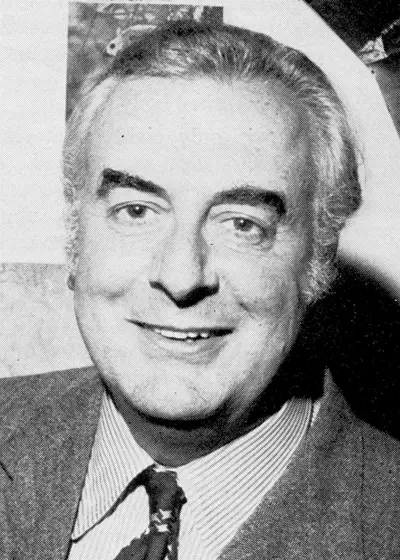
Edward Gough Whitlam AC QC was the 21st Prime Minister of Australia, serving from 1972 to 1975. He led the Australian Labor Party (ALP) to power for the first time in 23 years at the 1972 election. He won the 1974 election before being controversially dismissed by the Governor-General of Australia, Sir John Kerr, at the climax of the 1975 Australian constitutional crisis. Whitlam remains the only Australian prime minister to have been removed from office in this manner.
