Ida Tarbell Quotes
Very often people who admit the facts, who are willing to see that Mr. Rockefeller has employed force and fraud to secure his ends, justify him by declaring, 'It's business.' That is, 'it's business' has come to be a legitimate excuse for hard dealing, sly tricks, special privileges.
Tarbell, Ida M. The History of the Standard Oil Company. Vol. 2, McClure, Phillips & Co., 1904, p. 288.


The two politicians were amazed as they learned more and more about some of industrial leaders of the country. This is the language they used in private communications.

In the Citizens United case, the Supreme Court ruled that Corporations were people in the sense that the corporations had the right of freedom of speech in general and all political speech in particular and spending money on campaigns was a form of speech. Many thought that the consequences would be terrible for the American political system and urged legislation and/or a Constitutional Amendment. They particularly attacked the notion that a corporation was a person as this quotation illustrates.
It is not capitalism that is the problem but


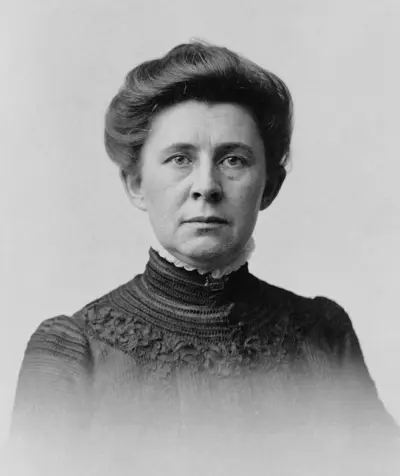
Ida Minerva Tarbell was an American writer, investigative journalist, biographer and lecturer. She was one of the leading muckrakers of the Progressive Era of the late 19th and early 20th centuries and pioneered investigative journalism. Born in Pennsylvania at the onset of the oil boom, Tarbell is best known for her 1904 book The History of the Standard Oil Company. The book was published as a series of articles in McClure's Magazine from 1902 to 1904. It has been called a "masterpiece of investigative journalism", by historian J. North Conway, as well as "the single most influential book on business ever published in the United States" by historian Daniel Yergin. The work would contribute to the dissolution of the Standard Oil monopoly and helped usher in the Hepburn Act of 1906, the Mann-Elkins Act, the creation of the Federal Trade Commission (FTC) and the Clayton Antitrust Act.
