David E. Sanger Quotes
Until Japan's economy drove off a cliff, there was a running argument in Asia about whether it would be wiser to follow the 'Japan model' - with its megacorporations, jobs for life, state control of strategic industries - or the 'American model' of largely unfettered markets.
Sanger, David E. The Inheritance: The World Obama Confronts and the Challenges to American Power. Harmony Books, 2009.


Professor Epstein is a libertarian free market economist who advocates patience even if there are clear problems like corruption, unsafe working conditions, and the like. This view holds that the free market will sort itself out more effectively than the government will be able to do. Others, disagree.


In the early years of our nation, there was not much intellectual property being developed in America. We were an underdeveloped nation, and we took whatever we could get regardless of laws. Alexander Hamilton for example urged obtaining industrial trade secrets and even machines by whatever means was necessary. However in the latter part of the 19th century, Nathaniel Hawthorns, Mark Twain and other creative Americans persuaded the government to join copyright conventions; we had become the victim of intellectual piracy rather than the pirates. Then we became the leading nation in advocating and enforcing intellectual property rights. This coincided with our becomng the leading producer of intellectual property. Intellectual property rights has always been an issue of “whose ox was gored.” The US position is somewhat hypocritical given our early history. However, respect for intellectual property rights, we now argue, in our modern global economy will encourage businesses to not only invest in developing countries but allow their technology and trade secrets to be used in the developing nation.
Zhou , Deng and other Chinese senior leaders carefully studied failures of 200th Century Communist nation economies from Russia to North Korea, and observed the successes of not only the United States and Western Europe, but South= Korea and Thailand å well and decided to transform to a capitalist style market and competitive economy. Zhou organized a cruse on which they invited Western economists and political economists to advise on how to make the transformation. Th Chinese took many of the Western ideas, placed them into a Chinese context, added some ideas of their own and proceeded ahead with the largest and most seectaculkar economic transformation and development in World history.


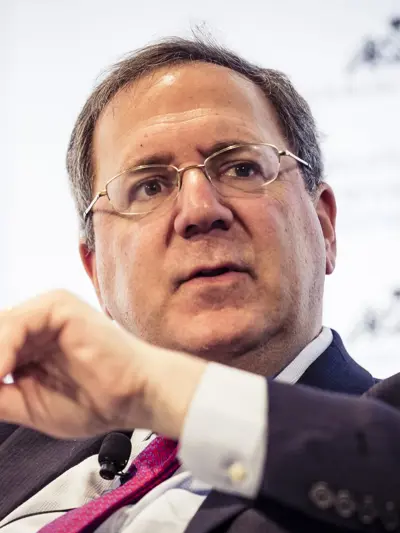
David E. Sanger is the chief Washington correspondent for The New York Times. A 1982 graduate of Harvard College, Sanger has been writing for the Times for 30 years covering foreign policy, globalization, nuclear proliferation, and the presidency.
