Arthur Compton Quotes
Typical of the fundamental scientific problems whose solution should lead to important industrial consequences are, for example, the release of atomic energy, which experiment has shown to exist in quantities millions of times greater than is liberated by combustion.
Compton, Arthur Holly. Atomic Quest: A Personal Narrative. Oxford University Press, 1956.

Rutherford had been the first to split the atom in 1919.


The lecture was on radium and the radioactivity that scientists had recently discovered. This appears to be the first time a scientist suggested the possibility of using atomic energy to produce a powerful weapon. At the same time, note that he also mentioned the possible destruction of the earth. “Heavy matter” referred to the elements—many of which had not yet been discovered—that had larger atomic numbers than radium like uranium.

Meitner and her nephew Frisch had been the first people to realize that the atom had been split. Meitner had described the process to her nephew and he made some drawings of the process she described. A few of these looked like a bacteria dividing. Frisch happened to meet with William A. Arnold, an American Biologist doing research in Stockholm. He asked Arnold what the biologists called it when a bacteria divided, and he replied, “fission”. Frisch told his aunt and she decided that they should use that term in the scientific article they were preparing on the splitting of the atom.


Under this initiative the US declassified and distributed technical, previously secret information, about atomic science to the world for scientific development. It has been very successful and there are few modern nations that have not benefitted from the program.


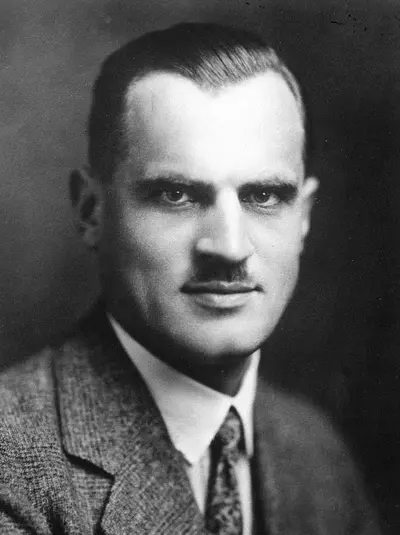
Arthur Holly Compton was an American physicist who won the Nobel Prize in Physics in 1927 for his 1923 discovery of the Compton effect, which demonstrated the particle nature of electromagnetic radiation. It was a sensational discovery at the time: the wave nature of light had been well-demonstrated, but the idea that light had both wave and particle properties was not easily accepted. He is also known for his leadership over the Metallurgical Laboratory at the University of Chicago during the Manhattan Project, and served as Chancellor of Washington University in St. Louis from 1945 to 1953.
