Sun Yat-sen Quotes
Two thousand years ago, we abandoned imperialism and militarism. We have been peace-lovers ever since.
Sun, Yat-sen. San Min Chu I: The Three Principles of the People. Translated by Frank W. Price, Commercial Press, 1927, p. 97.


This was a last attempt to avoid war. Lord Howe met with William Rutledge, John Adams and Benjamin Franklin. The discussions were civil and Howe wanted to avoid a conflict but he did not have the authority to accept the American colonists demand for independence.


When whites first came to America, the Iroquois, were the most sophisticated Native Americans. They were actually a confederation of 5 different tribes each of which was composed if many clans. Although fierce warriors, they had agreed not to fight each other and to assist if any were attacked. They developed a strong agricultural base, to go with the fishing and hunting, and their confederation were very aggressive and sophisticated traders taking them far from their upstate New York “capitol.” Their governmental structure was quite sophisticated with an elaborate, formal, system of checks and balances, multi-cameral legislatures that recognized numbers of citizens, power and wealth, and even cultural traditions. They were literate, capitalistic and globalistic in that they wanted to trade with all. They had written laws, and women had a role that was unique in world history in that only women owned property in a matrilineal society. Further, it was only the Clan Mothers who voted for the 50 Sachems (~Senators)—but their selections had to be accepted by the people they represented. Ironically the descendants of the Iroquois who remained in New York became a very successful Native American group. In the 2000 census, the average Indian in New York State earned the same income as the average White with no Indian gambling money.


1st Baronet Hart. The Customs Duty was a major revenue source for governments of the day. China, had such a history and culture of corruption, especially around customs, that the Empress Cixi, to the distress of many of her own people, appointed Hart to oversee the entire customs operations. The yield amazed all, and opposition to Hart evaporated except from the officials who could no longer profit as before. Hart served in this position for 47 years.

The Russian motivation for going to the aid of Serbia when the Austro-Hungarian Empire attacked that country was religious affinity. Both were of the Orthodox Church and the Orthodox Slaves had historically been attacked by the Roman Catholic Teutons. Russia had exercised hegemony over regions outside of Russia where there were Christian Orthodox co-religiouists.


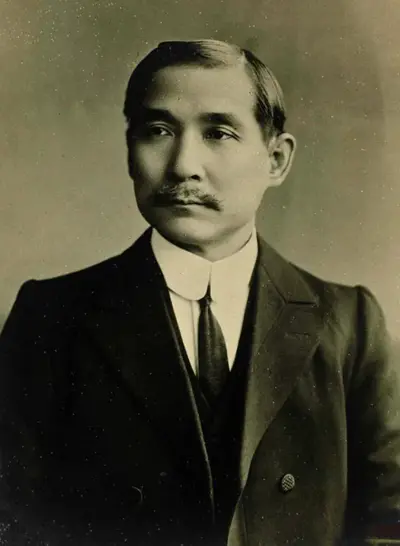
Sun Yat-sen was a Chinese statesman, physician, and political philosopher, who served as the provisional first president of the Republic of China and the first leader of the Kuomintang (Nationalist Party of China). He is referred as the "Father of the Nation" in the Republic of China, and as the "Forerunner of the Revolution" in the People's Republic of China for his instrumental role in the overthrow of the Qing dynasty during the Xinhai Revolution. Sun is unique among 20th-century Chinese leaders for being widely revered in both mainland China and Taiwan.
