William Lloyd Garrison Quotes
Truth no more relies for success on ballot boxes than it does on cartridge boxes.
William Lloyd Garrison, 1805-1879, Editor & Abolitionist, The Liberator, March 13, 1846
Sourced by: Eigen's Political and Historical Quotations


The Irish Republican Army was a terrorist independence movement of Northern Ireland—the part of Ireland that voted to remain attached to Britain rather than independent Ireland.


This speech is often referred to as the “Ballot or the Bullet” speech. It was the first time that Malcolm X used the “Ballot or the Bullet”. He was not the first African American to use the “Ballot or the Bullet” phrase. See {624102} for a use over 100 years ago. However, he was really arguing to allow Blacks to vote in the South where it was almost impossible at the time. There was no Voting Rights Act at that time and it was his actions that helped pass one shortly thereafter.


This phrase was also to be used over 100 years later by Malcolm X. See {624101} and {38291}.


He was the first American citizen who was assassinated by the Central Intelligence Agency by means of a drone attack. He was a major recruiter for Al Qaeda, and he preached to 3 of the 9-11 terrorists.


The reference is to the recently-passed Fugitive Slave Law, which many New Englanders, including Emerson, detested and vowed not to uphold.


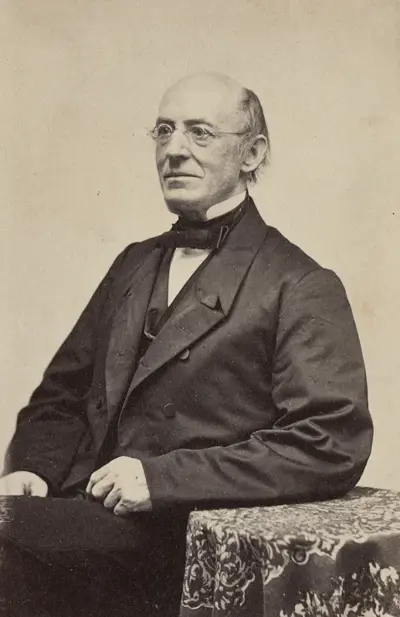
William Lloyd Garrison, who signed and printed his name Wm. Lloyd Garrison, was a prominent American abolitionist, journalist, suffragist, and social reformer. He is best known for his widely-read anti-slavery newspaper The Liberator, which he founded in 1831 and published in Boston until slavery in the United States was abolished by Constitutional amendment in 1865. He was one of the founders of the American Anti-Slavery Society, and promoted immediate and uncompensated, as opposed to gradual and compensated, emancipation of slaves in the United States.
