Gad Saad Quotes
Trigger warnings are part of the West's debauchery of self-indulgent victimhood.
Saad, Gad. The Parasitic Mind: How Infectious Ideas Are Killing Common Sense, Regnery Publishing, 2020.


U-Tube (Google) was faced with a very difficult decision when a Coptic Christian Islamaphobe produced and posted “Innocence of Muslims” a hateful video intended to inflame and insult Muslims. Despite the terrible content, U-Tube determined that the film did not violate their free speech standards and would not be censored. However, there were violent riots and demonstrations in reaction in a number of Muslim nations. People were being killed. So U-Tube decided to block the video in Egypt, Libya, Indonesia, and India (not a majority Muslim nation but had over 200 million Muslims). Galperin and others however made this important moral point. In essence to avoid unreasonable, and immoral violence, we censor materials and allow the perpetrators of violence to also force Americans to abandon the value of freedom of speech and freedom to read. There is a RIGHT to insult someone or their religion or their God. There is a right for all to, if they wish, view a video regardless of how hateful it is. There is NO moral responsibility for violence for ever publishing ANYTHING. The insulted person who resorts to violence is morally responsible and NO ONE ELSE. However some argue that, from a more fundamentalist point of view, the Muslim Holy Book REQUIRES blasphemers to be put to death. But, and often forgotten, the Jewish and Christian Old Testament requires the SAME death penalty for Blasphemy. So modernists insist that to follow holy books literally can often be immoral, and proper morality requires the ignoring of the “word of God”. It is a difficult question and while one can argue for or against the U-Tube Google decision, but taking either side of this question is reasonable and we all do the best we can with a ethically terribly difficult problem.


Marlette was inundated by complaints from Muslims for his 2002 cartoon depiction of Muhammad driving a Ryder rental truck like the one used by convicted Oklahoma City terrorist bomber, Timothy McVeigh. The caption was, “What would Muhammad drive?” He was front-page news in Saudi Arabia and other Islamic nations. He received death threats. The Council on American-Islamic Relations and the Muslim World League both demanded an apology. Marlette refused. When he was killed in an automobile crash in July of 2007, many Muslims believed that this was the retribution of Allah.

Lame was not opposed to civil rights as some who read this quotation sometimes conclude. He did think that much of the lack of success of minorities in America could be ameliorated by many self-improvement and individual efforts. His reference to destroying America, was an interesting rhetorical technique of assuming that what you advocate is not implemented and showing that it leads to disaster. Phrased this way, it gets and focuses the attention of an audience.


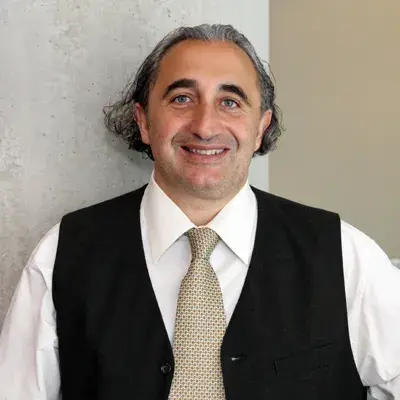
Gad Saad is a Lebanese-Canadian evolutionary psychologist and professor in the John Molson School of Business at Concordia University who is known for applying evolutionary psychology to marketing and consumer behaviour. He also writes a blog for Psychology Today, and hosts a YouTube channel titled "The Saad Truth".
