Joseph Chamberlain Quotes
[Transvaal President Paul] Kruger … dribbles out reforms like water from a squeezed sponge.
Joseph Chamberlain, 1836-1914, British MP (Liberal), Colonial Secretary, Mayor of Birmingham, Speech whipping up public opinion against the Boers, London, August 28, 1899
Sourced by: Eigen's Political and Historical Quotations


1st Viscount Millner. A gold strike was causing many British subjects to immigrate to the Transvaal, but the Boers did not want the newcomers to be able to vote and dilute their power. Meanwhile the two cultures--British and Boer--had very different values and differed especially on how they should deal with the indigenous Blacks. The Boers would not reform in the Transvaal as the British wanted, and the Boer War ensued.


South Africa’s transition from apartheid white minority rule to an interracial society with Black majority rule was one of the great political achievements in history. The Black leadership set a tone of reconciliation and inclusiveness that there was neither back retribution and vengeance, nor extensive white flight. Tutu and Nelson Mandella were two of those most resonsible for the leadership, but the good will and Christian charity of the South African blacks was the key to the success where all other white dominated African nations were NOT able to transition without extensive violence and/or flight.


Many conservatives of the 19th Century honestly believed that for a well-grounded man, it was impossible to make a radical moral or cultural change. Froude thought that it was but should be done very carefully and sparingly. See {636915}.


The Boers were lower class, uneducated, farmers from Holland who came to South Africa before the English did. They were at the bottom of the Dutch socioeconomic ladder. Unlike the English who were interest in establishing a trading colony, the Boers just wanted to own and farm the land and use blacks as slave or cheap labor. The Dutch Government and Trading companies lost interest in South Africa as there were much more profitable parts of the world, and they felt no obligation to the Boers whom they were glad to be rid of. So the Boers found themselves having to follow the British laws and rules of the British Colonial Office. Slavery was outlawed, and Blacks could be educated and become citizens under British law. They could own land, and contest the right of the Boers who had settled in some uninhabited land and some that was owned by Black tribes. The Blacks outnumbered the whites in general and the Boers, and there were educated Blacks who “outclassed” the still relatively uneducated Boers. So the Boers, fighting for their “way of life” set up their own area in Southern Africa and claimed independence. But Blacks claimed that it was their land and looked to the British to exercise English law. The Boer war ensued. Although the Boers lost the war, the bred at a much faster rate than the English, many of whom did not even have their families in South Africa. By the end of WWII, the Boer white majority controlled the government and kept the majority Blacks from voting and having full citizenship rights. They dominated Apartheid South Africa until the Black Revolutionists obtained control and although Black and white relations are better in South Africa than most countries, the extemeist Boers and most militant Blacks are in political, but not violent, conflict. Churchill and the British have always perceived themselves as being caught in the middle between the Boers and the Blacks.
F. W. De Klerk was the South African Prime Minister & President who worked with Nelson Mandella and the ANC leadership to end apartheid in South Africa. He became a Nobel Peace Prize Laureate.


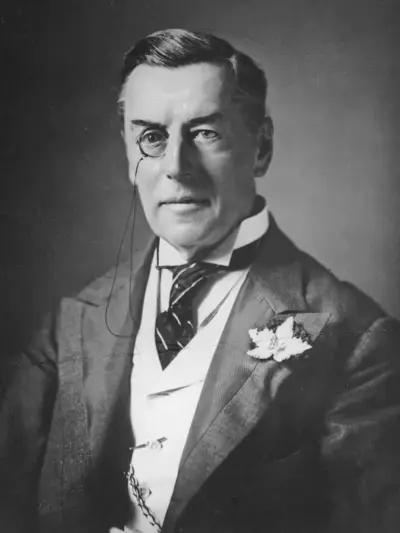
Joseph Chamberlain was a British statesman who was first a radical Liberal, then, after opposing home rule for Ireland, a Liberal Unionist, and eventually served as a leading imperialist in coalition with the Conservatives. He split both major British parties in the course of his career. He was father, by different marriages, of Austen Chamberlain and of Prime Minister Neville Chamberlain.
