Paul Feyerabend Quotes
Traditions are neither good nor bad, they simply are... Rationality is not an arbiter of traditions, it is itself a tradition or an aspect of a tradition.
Feyerabend, Paul. Science in a Free Society. NLB, 1978, p. 27.


Democracy and a republican form of government ran counter to the Chinese customs and failed, with Yuan Shikai taking all power—the “immemorial custom” of the autocratic Mancho and earlier Chinese dynasties. This failure of republican government in China so colored the future Chinese political leadership that both the Communists and Chang’s Kuomintang Nationalist anti-communists were both dictatorial and autocratic with great power lying in military hands. It was only in the later years of the 20th century that the Nationalists began to have a real democracy and although the Communists became avid capitalists and loosened up in terms of economic freedom, they did not feel the Chinese masses were ready to accept anything but the authoritarian political system that was the Chinese “immemorial custom”. They would not risk another collapse of modern government and all the factions fighting for control as in the Republic failure.
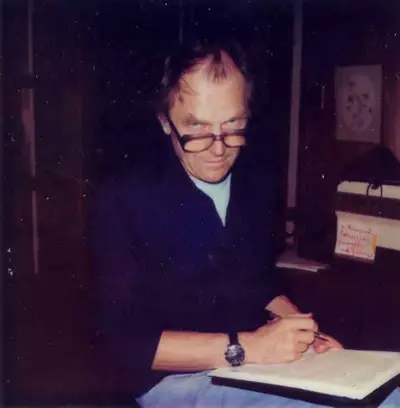
Paul Karl Feyerabend was an Austrian-born philosopher of science best known for his work as a professor of philosophy at the University of California, Berkeley, where he worked for three decades (1958–1989). At various points in his life, he lived in England, the United States, New Zealand, Italy, Germany, and finally Switzerland. His major works include Against Method (1975), Science in a Free Society (1978) and Farewell to Reason (1987). Feyerabend became famous for his purportedly anarchistic view of science and his rejection of the existence of universal methodological rules. He was an influential figure in the sociology of scientific knowledge. Asteroid (22356) Feyerabend is named in his honour.
