Gunnar Myrdal Quotes
Toward the middle and end of the Fifties, West European countries became somewhat more important as providers of aid to underdeveloped countries. It was partly due to the prodding of the United States that these countries, as they regained economic viability, should shoulder their share of the aid burden.
Myrdal, Gunnar. The Challenge of World Poverty: A World Anti-Poverty Program in Outline. Pantheon Books, 1970.


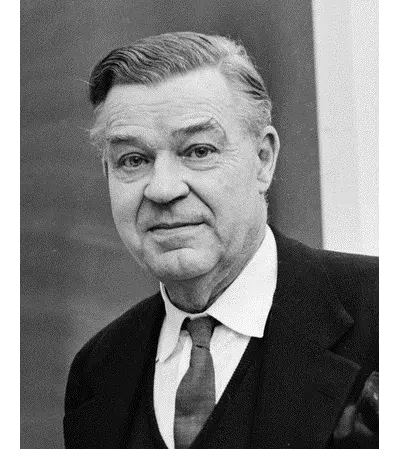
Karl Gunnar Myrdal was a Swedish economist and sociologist. In 1974, he received the Nobel Memorial Prize in Economic Sciences with Friedrich Hayek for "their pioneering work in the theory of money and economic fluctuations and for their penetrating analysis of the interdependence of economic, social and institutional phenomena." He is best known in the United States for his study of race relations, which culminated in his book An American Dilemma: The Negro Problem and Modern Democracy. The study was influential in the 1954 landmark U.S. Supreme Court Decision Brown v. Board of Education. In Sweden, his work and political influence were important to the establishment of the Folkhemmet and the welfare state.
