Christopher Hitchens Quotes
Totalitarian is a cliché, dictatorship is based on clichéd thinking, on very tried and tested uniform stuff. They don't mind that they're boring, they don't mind that they're obvious, their point is made.
Hitchens, Christopher. Letters to a Young Contrarian. Basic Books, 2001.


What is fascinating about this quotation is that England itself was an aristocracy with a monarchy and very few elements of fairness and equality. The aristocracy and the monarch very much used the system and the common people for their benefit. However, the degree of abuse and tyranny and absence of any sense of equity, shocked even this English aristocrat. Behoof was a Middle English word derived from words that mean to profit from. By the time he used it, it meant benefit or advantage—a slightly wider meaning, but even in 1591 it was not a commonly used words but one used more by the intelligentsia of the day.

Lippmann was the most influential pundit of the time. Roosevelt had just been elected but had not yet assumed office. The country was in the midst of the Great Depression and many communities had 80% unemployment. Banks had failed, people were starving, and many people thought that democracy was just not suited to deal with such severe problems. Roosevelt, however rejected the advice and always worked through the Congress and in so doing saved democracy in America.


Arguing the need to limit the power of the legislature:


His official title was: “President for Life, Protector of the People, Maximum Chief of the Revolution, Apostle of National Unity, Benefactor of the Poor, Grand Patron of Commerce and Industry, and Electrifier of Souls”. He made a mockery of his statement that the people are the source of all power.

This quotation was extremely damaging to Russian Communism at the time. Goldman had been extremely supportive of the initial Russian Revolution and was an enthusiastic Marxist. She was not the typical conservative who would attack the revolution no matter what the outcome.


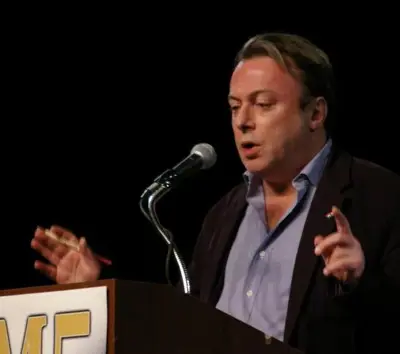
Christopher Eric Hitchens was an English-American intellectual, polemicist, and socio-political critic, who expressed himself as an author, orator, essayist and columnist. He wrote, co-wrote, edited or co-edited over 30 books, including five of essays on culture, politics and literature. Having contributed to several publications, he is broadly regarded as one of the most influential atheists of all time.
