Joan Halifax Quotes
To work with Kaz on this kind of project is a fascinating process...He seems to be Dogen himself when offering the translations that we Western collaborators then refine with him.
Halifax, Joan. Foreword. Treasury of the True Dharma Eye: Zen Master Dogen's Shobo Genzo, edited by Kazuaki Tanahashi, Shambhala Publications, 2010.


The inscrutability of the “oriental” was not racial as Nicholson and many others thought as most Asians who became Westernized tend to behave and respond to the Western culture in which they were brought up. However, many of the “oriental” cultures place a premium on inscrutability and avoidance of candor. Therefore, often they interact with Westerners and are unsure of the certainty of what they hear and observe. Or they hear it in ways that in their culture would not indicate strong feeling when that was intended by the Westerner. For example, Arab oratory tends to repeat something intensely felt several if not many times. A Western Diplomat who thinks he “makes himself clear” might slow down and emphasize each word distinctly—a sign of strong emphasis in Western oratory—but if only stated once or twice might not be taken as seriously meant. So communicating between cultures has often caused difficulties which people have assumed were racial characteristics but were cultural.


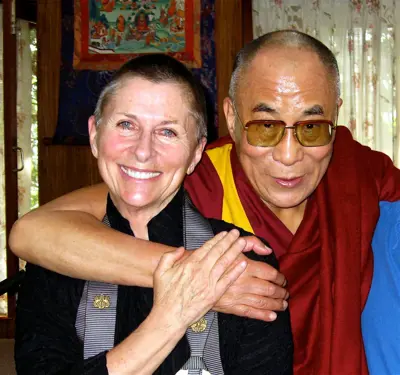
Joan Jiko Halifax is an American Zen Buddhist teacher, anthropologist, ecologist, civil rights activist, hospice caregiver, and the author of several books on Buddhism and spirituality. She currently serves as abbot and guiding teacher of Upaya Zen Center in Santa Fe, New Mexico, a Zen Peacemaker community which she founded in 1990. Halifax-roshi has received Dharma transmission from both Bernard Glassman and Thich Nhat Hanh, and previously studied with the Korean master Seung Sahn. In the 1970s she collaborated on LSD research projects with her ex-husband Stanislav Grof, in addition to other collaborative efforts with Joseph Campbell and Alan Lomax. She is founder of the Ojai Foundation in California, which she led from 1979 to 1989. As a socially engaged Buddhist, Halifax has done extensive work with the dying through her Project on Being with Dying (which she founded). She is on the board of directors of the Mind and Life Institute, a non-profit organization dedicated to exploring the relationship of science and Buddhism.
