Fyodor Dostoevsky Quotes
To strive consciously for an object and to engage in engineering -- that is, incessantly and eternally to make new roads, wherever they may lead.
Dostoevsky, Fyodor. Notes from Underground. Translated by Richard Pevear and Larissa Volokhonsky, Vintage Books, 1993, p. 30.


In 1869 the all male legislature of Wyoming at the urging of legislator Col. William Bright passed legislation allowing women not only to vote but to hold public office. A local Justice of the Peace was so outraged that he resigned in protest. Then Esther Morris ran for the vacated position and won becoming the first woman to hold public office. See {585019} & {585018}


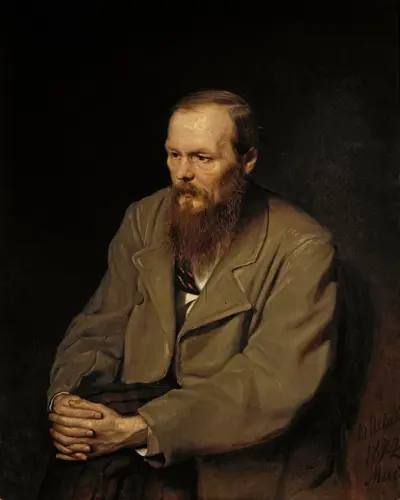
Fyodor Mikhailovich Dostoevsky, sometimes transliterated as Dostoyevsky, was a Russian novelist, philosopher, short story writer, essayist, and journalist. Dostoevsky's literary works explore human psychology in the troubled political, social, and spiritual atmospheres of 19th-century Russia, and engage with a variety of philosophical and religious themes. His most acclaimed works include Crime and Punishment (1866), The Idiot (1869), Demons (1872), and The Brothers Karamazov (1880). Dostoevsky's body of works consists of 12 novels, four novellas, 16 short stories, and numerous other works. Many literary critics rate him as one of the greatest psychological novelists in world literature. His 1864 novel Notes from Underground is considered to be one of the first works of existentialist literature.
