Harold Ford Jr. Quotes
To say that I am pro life is just wrong. I am personally pro-choice and legislatively pro-choice.
Ford, Harold, Jr. Interview. The New York Times, The New York Times Company, Jan. 2010.

Romney had a reputation for changing his political position and trying to straddle positions. After losing this race, Romney improved as a candidate and did not try and straddle as much. He won the governorship in the next election.


This quotation is one of the best examples of political flip flopping and expedience. The quotation taken by itself is not unusual and is the same position as political candidates in Massachusetts have taken for years regardless of political party. Romney was then running for the Senate—a race that he lost. Later he ran for Governor on the same position and won. However in 2008, he decided to run for the Republican nomination for the Presidency. However, at that time, the Christian Religious Right had sufficient clout within the Republican party that no one with Romney’s position on abortion would be likely to win the nomination. So Romney reversed his position on abortion and when accused of flip-flopping for political expediency, claimed that he had had an epiphany regarding abortion. However as this quotation shows, he had always believed that the personal abortion views of candidates should NOT be brought into the campaign. However along with his epiphany on abortion itself, he conveniently now claimed every candidate should constantly declare in his campaigning his position on abortion. He also flip flopped on many other issues including repudiating the Obama Health Care reform which was modeled after the very successful program he had supported when Governor. He changed on so many issues that even the Christian Right Wing Fundamentalists, whose political positions he espoused did not always trust him, nor did most of the moderates and liberals whose views he used to claim when it was politically advantageous to do so.

John Ashcroft was then the Attorney General and a foe of abortion.


Reactionary Southerners like Helms have always attributed any calls for change in their states to “outsiders” who were “invading.”


Churches are political organizations too and are subject to the forces of their membership. In the case of the Southern Baptist Convention in 1971 they passed resolutions to assure the right of a woman to have an abortion to protect her health. The position on abortion changed steadily thereafter to even pass Constitutional amendments to ban abortions except to save the life of the mother. See {614356},54122, {614358}, {614359}, {614360}, {614361} for the dynamic history of the change.


This quotation is very surprising to most people who are not familiar with the history of the struggle regarding abortion in America. In the early days of the family planning movement and when abortion rights were first advocated in America, the proponents were almost all Republicans. At the time, the Republican Party consisted of economic conservatives and social liberals—“Rockefeller Republicans they would later be called. At the same time the Democratic Party was aligned very differently. The Southern Conservatives and fundamentalist Protestants of the Bible Belt were all Democrats. Most Roman Catholics were Democrats. Intellectuals at the time tended to side with the Democrats on economic issues and with the Republicans on social issues. In the 1960s the Republicans went after the racist resentment in the South over the Civil Rights Act of 1964. The Southern Democrats of the Solid South switched to the Republican Party, and many liberal republicans, reacting to their party now being the party of the the anti equality racists, became Republicans. The Southern Democrats then pushed out the moderate Republicans who were the social liberals.
Churches are political organizations too and are subject to the forces of their membership. In the case of the Southern Baptist Convention in 1971 they passed resolutions to assure the right of a woman to have an abortion to protect her health. The position on abortion changed steadily thereafter to even pass Constitutional amendments to ban abortions except to save the life of the mother. See {614356},54122, {614358}, {614359}, {614360}, {614361} for the dynamic history of the change.


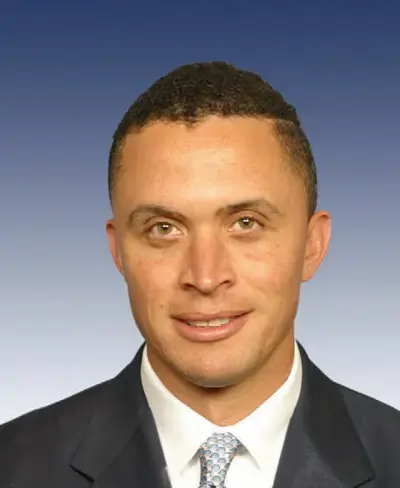
Harold Eugene Ford Jr. is an American financial managing director, pundit, author, and former U.S. congressman who served from 1997–2007 in the United States House of Representatives as a member of the Democratic Party from Tennessee's 9th congressional district, centered in Memphis. He is the son of former Congressman Harold Ford Sr., who held the same seat for 22 years. In 2006, Ford made an unsuccessful bid for the U.S. Senate seat vacated by retiring Bill Frist. He is a member of the Ford political family from Memphis. Ford was the last chairman of the Democratic Leadership Council (DLC).
