Thomas Paine Quotes
To say that any people are not fit for freedom, is to make poverty their choice, and to say they had rather be loaded with taxes than not.
Paine, Thomas. Rights of Man, Part II. J.S. Jordan, 1792, p. 11.


In 1820, convoyed by the war-sloop Cyane, American free Negroes (33 men ,18 women and some children) set out for Africa pursuant to a new program authorized by Congress and President Monroe. However, the details of the endeavor had not been worked out and after the Negroes’ experience in the U. S. the would-be settlers were suspicious of all government.


Anna Moiseyeva Rosenstein. See {637759} for a similar view from Austria.


This fascinating quotation is very frequently quoted out of context. For example even in modern times some Southern slavery apologists quote this passage stating that Adams saw no moral difference between slavery and employment of the lower classes. And anti-capitalists have claimed that this was an attack on capitalism as no better than slavery for many workers. Neither is true. The debate was on the head taxes that states should pay to the central government. Southerners were claiming that they should not have to pay per person taxes on slaves. Adams position was that they should pay in that there is no practical difference in the work and working conditions very often. If slaves should be exempted from the head tax, so should the poor, lower class workers like the fisherman in New England. He always maintained at huge moral difference between a poor free worker and a slave even thought their working conditions might be similar.


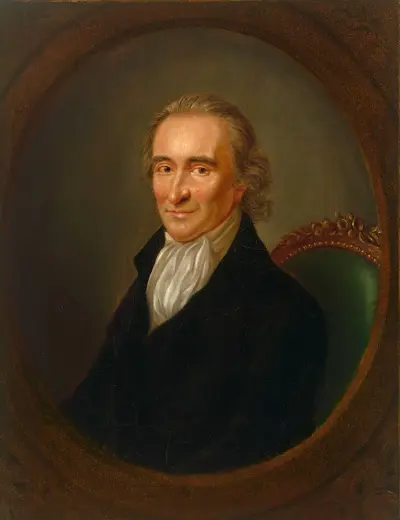
Thomas Paine was an English-born American political activist, philosopher, political theorist, and revolutionary. He authored Common Sense (1776) and The American Crisis (1776–1783), the two most influential pamphlets at the start of the American Revolution, and helped inspire the patriots in 1776 to declare independence from Great Britain. His ideas reflected Enlightenment-era ideals of transnational human rights. Historian Saul K. Padover described him as "a corsetmaker by trade, a journalist by profession, and a propagandist by inclination".
