Fyodor Dostoevsky Quotes
To kill someone for committing murder is a punishment incomparably worse than the crime itself. Murder by legal sentence is immeasurably more terrible than murder by brigands.
Dostoevsky, Fyodor. The Idiot. Translated by Richard Pevear and Larissa Volokhonsky, Vintage Books, 2002, p. 20.


He referred to the Biblical injunction for capital punishment which mandated the death penalty for murder. However the Bible also requires the death penalty for adultery, heresy, blasphemy, homosexuality, and a number of other offenses including a son being disobedient to his father where death was also proscribed. This quotation is an excellent example of a rhetorical political technique where the speaker selectively provides the truth. Taken at its face, this argument would persuade many people, few of whom would still support the argument if they knew that it applied equally to a host of other behaviors many of which are not even regarded as crimes in a modern civilized society.


In July of 1994 Hill murdered a physician whom he believed performed abortions, his driver and wounded his wife, Pensecola, Florida.


These murders were punished by burning at the stake and other gruesome forms of execution as if a king had been murdered.


Her view was only held by a few British citizens. Capital Punishment was ended in Britain.
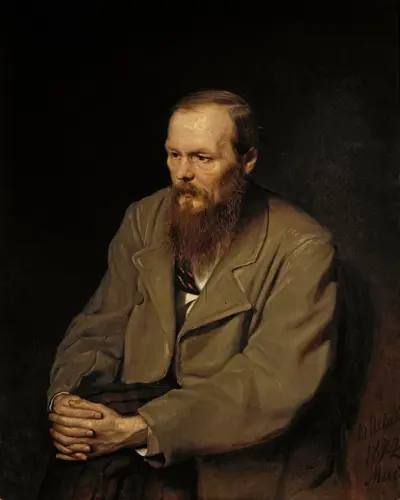
Fyodor Mikhailovich Dostoevsky, sometimes transliterated as Dostoyevsky, was a Russian novelist, philosopher, short story writer, essayist, and journalist. Dostoevsky's literary works explore human psychology in the troubled political, social, and spiritual atmospheres of 19th-century Russia, and engage with a variety of philosophical and religious themes. His most acclaimed works include Crime and Punishment (1866), The Idiot (1869), Demons (1872), and The Brothers Karamazov (1880). Dostoevsky's body of works consists of 12 novels, four novellas, 16 short stories, and numerous other works. Many literary critics rate him as one of the greatest psychological novelists in world literature. His 1864 novel Notes from Underground is considered to be one of the first works of existentialist literature.
