Friedrich Nietzsche Quotes
To die proudly when it is no longer possible to live proudly. Death freely chosen, death at the right time, brightly and cheerfully accomplished amid children and witnesses: then a real farewell is still possible, as the one who is taking leave is still there; also a real estimate of what one has wished, drawing the sum of one's life--all in opposition to the wretched and revolting comedy that Christianity has made of the hour of death.
Nietzsche, Friedrich. Twilight of the Idols. Translated by R.J. Hollingdale, Penguin Books, 1968, p. 84.


His documentation of Bushido—the way of the warrior—has influenced Japanese culture and behavior even into modern times. This statement in large part explained the behavior of Japanese troops in WWII. Surrender was considered cowardice and therefore fighting to the death was required of all Japanese. This particular work was studied by American experts on Japan and the assumption that this was the Japanese cultural imperative for soldier and civilian alike, was one of the major factors leading Truman and America to use the Atomic bomb in WWII for they did not anticipate any Japanese surrender otherwise and an invasion of the Japanese mainland would have killed more Japanese and many Americans as well. Even after the first atomic bomb on Hiroshima, the Japanese would not surrender and it took the Emperor to finally contradict the Japanese culture as stated in Yamamoto Tsunetomo’s writing. See also {586232}.


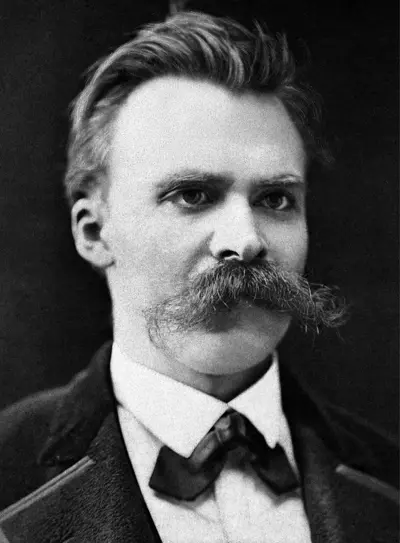
Friedrich Wilhelm Nietzsche was a German philosopher, cultural critic, composer, poet, writer, and philologist whose work has exerted a profound influence on modern intellectual history. He began his career as a classical philologist before turning to philosophy. He became the youngest person ever to hold the Chair of Classical Philology at the University of Basel in 1869 at the age of 24. Nietzsche resigned in 1879 due to health problems that plagued him most of his life; he completed much of his core writing in the following decade. In 1889, at age 44, he suffered a collapse and afterward a complete loss of his mental faculties. He lived his remaining years in the care of his mother until her death in 1897 and then with his sister Elisabeth Förster-Nietzsche. Nietzsche died in 1900.
