Randal Marlin Quotes
To avoid repeating the mistakes of the past, an alert citizenry today should take the trouble to learn how easy it can be for a powerful minority to manipulate information to win the support-or the indifference-of the majority towards an action.
Marlin, Randal. Propaganda and the Ethics of Persuasion. Broadview Press, 2002.


This is a fascinating quotation because it illustrates how political attitudes have changed since then. Stevenson meant this to be an insult to and even a charge against the men who ran the Eisenhower administration and campaign but not the President personally. And that was the way that it was taken. Republicans were insulted and thought this was a scurrilous charge by a candidate who was down in the polls but wanted to throw “red meat” to his base. However, when we read the statement today, it doesn’t seem at all like an insult. As a matter of fact, there are few politicians today, of either party, who would not agree with the views that Stevenson accuses the Republican strategists of having. Arguably, the Democrats were historically very slow to arrive at he place the Republicans had achieved. But in 1956 it was almost unethical to use shows and advertising techniques to manipulate public opinion. Politicians had been doing it since the beginning of our Republic but it used to be something a little dirty—something to which no one wanted to public admit believing. Today, politicians of both parties are often criticized by their base and the pundits for not believing sufficiently in the importance of image manipulation and advertising. Today, virtually no politicians have any moral scruples about using the techniques, doing so overtly and being proud of their staffs for being good at it.

This was Moyers paraphrase if Chomsky’s position to which Chomsky agreed.


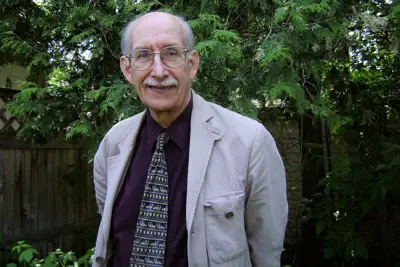
Randal Marlin (born 1938 in Washington, D.C.) is a Canadian philosophy professor at Carleton University in Ottawa who specializes in the study of propaganda. He was educated at Princeton University, McGill University, the University of Oxford, Aix-Marseille University, and the University of Toronto. After receiving a Department of National Defence fellowship to study under propaganda scholar Jacques Ellul at Bordeaux in 1979–1980, he started a philosophy and mass communications class at Carleton called Truth and Propaganda, which has run annually ever since.
