Wilhelm Dilthey Quotes
To attempt this would be like seeing without eyes or directing the gaze of knowledge behind one's own eye. Modern science can acknowledge no other than this epistemological stand-point.
Dilthey, Wilhelm. Selected Works, Volume I: Introduction to the Human Sciences. Edited by Rudolf A. Makkreel and Frithjof Rodi, Princeton University Press, 1989, p. 73.


This seemingly abstruse philosophical statement actually found its way into one of the major political debates of the 21st Century when the Secretary of Defense was defending the management of the Iraq War and the interpretation of intelligence. See {586062}.


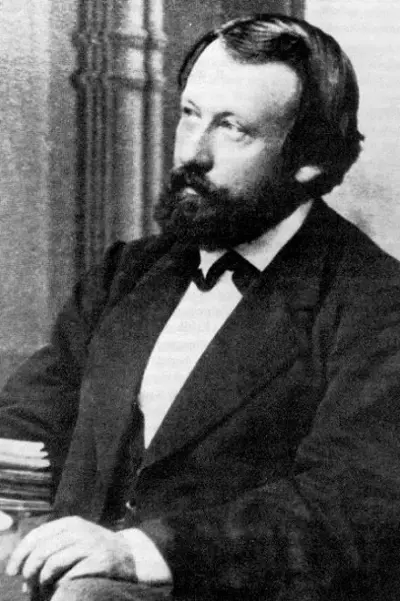
Wilhelm Dilthey was a German historian, psychologist, sociologist, and hermeneutic philosopher, who held G. W. F. Hegel's Chair in Philosophy at the University of Berlin. As a polymathic philosopher, working in a modern research university, Dilthey's research interests revolved around questions of scientific methodology, historical evidence and history's status as a science. He could be considered an empiricist, in contrast to the idealism prevalent in Germany at the time, but his account of what constitutes the empirical and experiential differs from British empiricism and positivism in its central epistemological and ontological assumptions, which are drawn from German literary and philosophical traditions.
