Thomas Carlyle Quotes
To a shower of gold most things are penetrable.
Thomas Carlyle, 1795-1881, Scottish essayist and historian, History of the French Revolution
Sourced by: Eigen's Political and Historical Quotations


Many were new to Washington politics and lobbyists.

In most modern societies there is a combination of merit appointments and repayment of the rich. In the United States, wealthy people are often appointed as Ambassadors to countries of which they know little and often do not even speak the language. Assistant secretaries of cabinet level positions also often are awarded to the wealthy campaign contributors. Occasionally, these wealthy people have talent and do a good job. On most occasions where a person is appointed as the direct or indirect result of wealth, the person is mediocre or poor.


He was originally a teacher and made a fortune as a politician through corruption which was extreme in Mexico and is still quite bad.

Any fortress can be stormed provided there is a way up for a donkey with a load of gold on his back.
The greatest general and conqueror always tried to avoid a battle and casualties whenever possible. He was a master and bribing corrupt officials to surrender forts and cities or to disclose weaknesses in the defense. Gold was one of his major weapons.
In most societies the wealthy have been able to control or influence the laws. Even in industrial democracies the rich have more influence over the laws than the rest of the population. At times in America it was only the wealthy who were educated and participated in government. Later the rich bribed legislators. In modern times the primary mechanism is campaign contributions but bribery is still a factor.
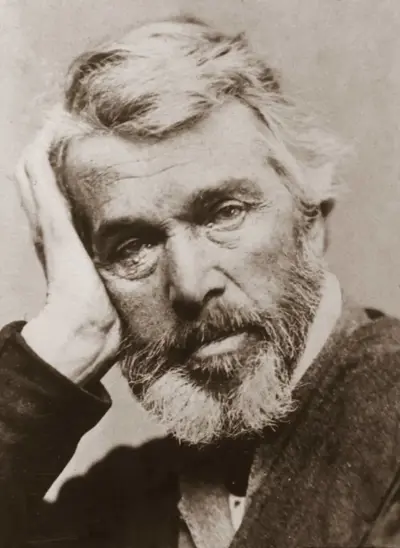
Thomas Carlyle was a Scottish historian, satirical writer, essayist, translator, philosopher, mathematician, and teacher. In his book On Heroes, Hero-Worship, and The Heroic in History (1841), he argued that the actions of the "Great Man" play a key role in history, claiming that "the history of the world is but the biography of great men". Other major works include The French Revolution: A History, 3 vols (1837) and The History of Friedrich II of Prussia, Called Frederick the Great, 6 vols (1858–65).
