Thomas Carlyle Quotes
Time was when an incompetent Governor could not be permitted among men. He was, and had to be, by one method or the other, clutched up from his place at the helm of affairs, and hurled down into the hold, perhaps even overboard, if he could not really steer. And we call those ages barbarous, because they shuddered to see a Phantasm at the helm of their affairs
He was distressed that “civilized” England had no way to get rid of an incompetent Prime Minister or other political leader, much less as incompetent king. (The King still held some power and influence then.
Thomas Carlyle, 1795-1881, Scottish essayist and historian, Member of Parliament, Downing Street, April 1, 1850
Sourced by: Eigen's Political and Historical Quotations


He had asked Acheson to be Secretary of State and Acheson told the President that he did not feel qualified to do the job. Acheson then accepted.


The Flemmish city of Ghent needed a Governor. Du Bois approached Philip Van Artevelde whose father had been a successful governor to see if he would be interested in assuming the office. Many cities, while not democracies, did elect their ruler as for a time was done on Ancient Rome. This quotation is interesting in that Du Bois, a kingmaker politician, shows us what qualifications were perceived necessary for a Governor of a major city.


It was almost unheard of for generals and retired generals to criticize the administration publicly, but the George W. Bush Administration polarized not only the country as a whole but the military as well.

Not all kings were uncaring aristocrats and a few were excellent, compassionate, rulers. Most were not however.


Compare this quotation with {632907}. Most members of Congress had limited management experience and the only solution to an organizational problem was to fire people. The referenced quotation has people fired to trigger reform and change; in this quotation, it is for the purpose of inspiring public trust. Ironically, there is no evidence in the management literature that suggests that firing for either of these reasons will have the desired objective.

The challenge to the leader of a private corporation is very similar to that of a Governor or a President—a leader of a government.
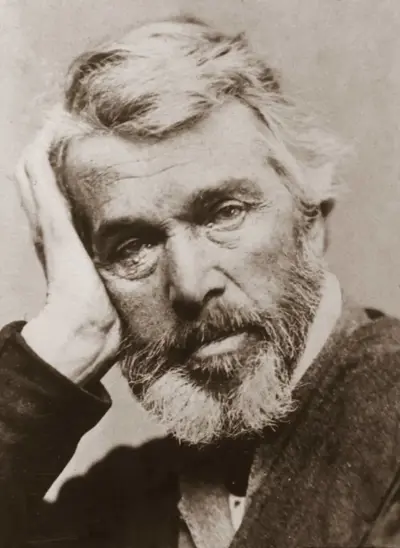
Thomas Carlyle was a Scottish historian, satirical writer, essayist, translator, philosopher, mathematician, and teacher. In his book On Heroes, Hero-Worship, and The Heroic in History (1841), he argued that the actions of the "Great Man" play a key role in history, claiming that "the history of the world is but the biography of great men". Other major works include The French Revolution: A History, 3 vols (1837) and The History of Friedrich II of Prussia, Called Frederick the Great, 6 vols (1858–65).
