Frederick the Great Quotes
Rulers should always remind themselves that they are men like the least of their subjects.
Frederick II, 1712-1786, [The Great], King of Prussia, Essay on the Forms of Government
Sourced by: Eigen's Political and Historical Quotations


This is an amazing speech which illustrated the best of the development and growth of Islam. Note that: The ruler who has just been given ALL secular AND religious power admits candidly that he may not be the best qualified. This would not happen for over another 1000 years and even today is very rare in any society. In addition, he invites the citizens to correct him when he is wrong. Later, Calihs would, like the Christian kings and popes claim infallibiity and kill any who suggested otherwise. And daring to correct the ruler was capital offence for most of history and is even dangerous in some Muslim countries today. Last and perhaps most amazing, the new Caliph called for an affirmative leveling of the inequality of rights and power and announces it asa one of his major responsiblities. It is this kind of vision so unheard of at the time which shows us why so many flocked to Islam at the time. From a fairness, human rights, and accoutabiity of the ruler point of view Islam was the most modern of the religions then. Tragically, other forces shaped Islam for the next 1500 years and most Muslim countries become the least modern and its rulers are least accountable to the citizenry with none of the other rights and concept of fairness that Abu Bakr and other early Islamic leaders brought.


Churchill's first government job was as Undersecretary of the Colonies. Shortly after his appointment he observed:


The papyrus appears to be an instruction booklet for government officials.


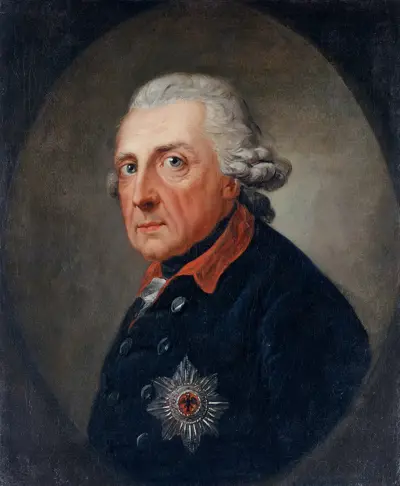
Frederick II was a Prussian king and military leader who ruled the Kingdom of Prussia from 1740 until 1786, reigning longer than any other Hohenzollern king. His most significant accomplishments during his reign included his reorganization of Prussian armies, his military successes in the Silesian wars and the Partitions of Poland, and his patronage of the arts and the Enlightenment. Frederick was the last Hohenzollern monarch titled King in Prussia and declared himself King of Prussia after annexing strategic parts of the Polish–Lithuanian Commonwealth in 1772. Prussia greatly increased its territories and became a leading military power in Europe under his rule. He became known as Frederick the Great (German: Friedrich der Große) and was nicknamed "The Old Fritz" (German: "Der Alte Fritz") by the Prussian people and eventually the rest of Germany.
