Mona Charen Quotes
Time and time again throughout the latter part of the Cold War, liberals chose a morally perverse pose. They would seek to find any suspect motive or impure act on the part of the United States rather than confront the staggering scale of destruction and misery being wrought by our adversaries.
Charen, Mona. Useful Idiots: How Liberals Got It Wrong in the Cold War and Still Blame America First. Regnery Publishing, 2003.


What if you are a conservative in a liberal environment? Then what you are conserving is liberalism.
His reference was to his experience as an undergraduate at Dartmouth, which he and associates views as a liberal organization, while others viewed it as a conservative bastion of the establishment.


In the latter part of the 20th century and the beginning of the 21st, one of the tactics of conservatives was to accuse liberal candidates and office holders of being un-American, unpatriotic, and disloyal to the country. The tactic goes back to the beginning of the nation when Jefferson and the Democratic Republicans claimed the Federalists were un-American--monarchists and Anglophiles. In the 1950’s, Senator Joseph McCarthy attacked President Truman, Secretary of State Acheson, Secretary of the Army Stevenson and many others for “un-Americanism.” Even wounded war hero, paraplegic, Senator Max Cleland was accused by Republicans a of being unpatriotic which led to his defeat at the polls. So accusing the President of being un-American, was that unique an act even though it shocked most Americans.

This quotation illustrates the statements of White that caused conservatives to dislike him. However, most historians agree that White passed classified information to the Russians. He was accused of being a Communist, but there was never any evidence of that. Some people believe that he was a spy for the Russians and committed espionage, but others disagree observing that White was very much his own man and felt that much information that was classified never should have been. White substituted his own judgment, it is believed, about what could be given to the Russians for the security system. He was an admirer of what Russian socialism had accomplished economically, educationally and medically since the 1917 revolution deposing the Czar. Russia had been a valuable military ally, which had taken the brunt of both military and civilian casualties in WWII. White’s economics were certainly not Marxist but very much Keynesian. He was subpoenaed by the House Un-American Activities Committee where he was accused of being a Communist which he denied (see {634907}). He died of a heart attack 3 days later.

President Trump did not personally believe in the tenets of White Supremacism, but a significant part of his political base did. His public approval in his first year in office was the lowest in history since such were measured, and he was desparate to hold on the the support of his base. So, unlike most Republicans who castigated and condemned White Supremacism and other hate groups, and the alt-Right, Trump not only remained silent, but actually tried to create a moral equivelence between some of the White Supremacists and some of the Left Wingers who were protesting the White Supremicists. Trump insisted that he did not condone or encourage hate groups or white supramacy advocates, but most of the public did, and, most importantly, they thougth that he did and gave him public credit for that as in this quotation. See {645359}.


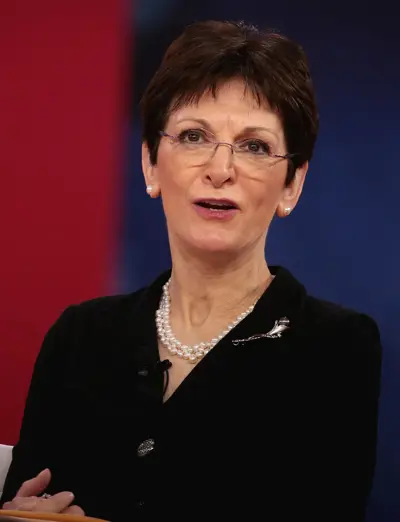
Mona Charen Parker is a columnist, journalist, political commentator, and writer in the United States. She has written three books: Useful Idiots: How Liberals Got it Wrong in the Cold War and Still Blame America First (2003), Do-Gooders: How Liberals Hurt Those They Claim to Help (and the Rest of Us) (2005), both New York Times bestsellers, and Sex Matters: How Modern Feminism Lost Touch with Science, Love, and Common Sense (2018). She was also a weekly panelist on CNN's Capital Gang until it was canceled. A political conservative, she often writes about foreign policy, terrorism, politics, poverty, family structure, public morality, and culture. She is also known for her generally pro-Israel views.
