Fanny Kemble Quotes
Though the Negroes are fed, clothed, and housed, and though the Irish peasant is starved, naked, and roofless, the bare name of freemen—the lordship over his own person, the power to choose and will—are blessings beyond food, raiment, or shelter; possessing which, the want of every comfort of life is yet more tolerable than their fullest enjoyment without them.
Fanny Kemble, 1809–1893, British actress and author, Journal of a Residence on a Georgian Plantation in 1838-1839, 1863
Sourced by: Eigen's Political and Historical Quotations

Johnson had a white mistress who accompanied him visibly at a time when Blacks were lynched for dating white women in many parts of the country. He was criticized heavily by whites for going with a white woman and many Blacks for the same.


This is one of the earliest and most eloquent argument for an end to racial discrimination. Burchard argued for giving Blacks the right to vote. While Wisconsin was vehemently opposed to slavery, the convention decided to not include or preclude Negroes from voting and instead left the issue up to later legislatures.

Liberia was founded by freed American slaves.


Earlier {629154} Smith was much more sympathetic with slavery. His views evolved as you can see by the comparison. He stated that he had a vision and made two prophesies {629156} that indeed came true. The last idea of slave buyouts seemed plausible to many abolitionists initially when they were not really knowledgeable about the economics of slavery. However, once they studied it, it became clear what it would not work even if the Southerners would then be willing to accept Blacks as free laborers which most were not, The two biggest problems were: 1) the international slave trade had been abolished. The only source of new slaves for growth was breeding them. Therefore, having slaves had TWO economic values—the work that they could do and the reproduction of themselves. A critical mass of owned slaves produced an income forever. And for Southerners who were culturally adverse to work (see {629169}), just having cash for their slaves was not enough. They were the servants, the farm labor, and their recreational sex. 2) and most important, the value or the slaves of the South was greater than the economic value of all the land, all the farms, all the buildings, all the factories, and all the inventory of the stores of the South all put together. The Southern slaves were the majority of the wealth of the south. There was no asset that could ever produce enough value to pay for the slaves—even over time. It would be like trying to buy all the shares of all the corporations in America today. There is no asset big enough to raise the money to ever finance it. The idea may have worked in Colonial America or even prior to the outlaw of the international slave trade, but by the time anyone took the idea seriously it was economically no longer feasible.

The first Civil Rights Act {587712} was passed a few months before and has some of the same language as Congress wanted to make the laws very clear. The Southern Rebels who insisted on their right to have guns during Reconstruction, viciously denied that same right to the newly freed slaves. Sickles tried to remedy this, but the KKK and other terrorists intimidated most of the Blacks into not using the right that they had. Later, they would do that with the right to vote. In January, the Commanding General in charge of South Carolina had issued an order protecting the rights of Blacks to have guns {629894}. This law applied that to the entire country. The Southerners have always supported the 2nd Amendment except when Blacks wanted to have arms.


Ironically, events later supported the truth of his statement. He was wrong about the parties however. It was the South who denied liberty to a very large part of their population, and it was the “unconquerable will” of the enslaved Negroes that eventually prevailed. It is hard for most of us in modern times to understand why Davis and other Southerners saw themselves as having freedom curtailed over an economic factor—chattel slavery—and not see that the institution of slavery was a total denial of freedom to a huge part of their population. See England’s Dr. Johnson XXXXX for a classic contemporary statement of this contradiction.


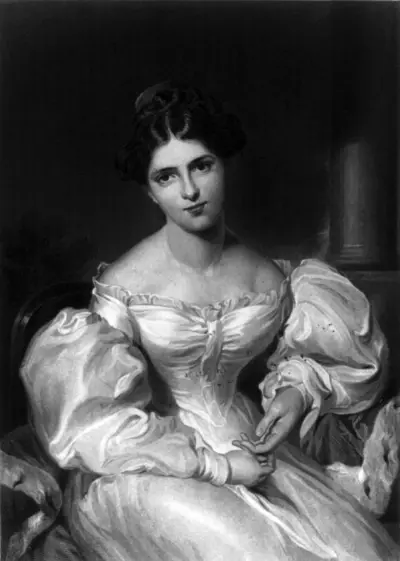
Frances Anne "Fanny" Kemble was a British actress from a theatre family in the early and mid-19th century. She was a well-known and popular writer and abolitionist, whose published works included plays, poetry, eleven volumes of memoirs, travel writing and works about the theatre.
