Thomas Moore Quotes
Though an angel should write, still 'tis devils must print.
Moore, Thomas. The Fudges in England. Longman, Rees, Orme, Brown, Green, & Longman, 1835, p. 30.


In September of 2005 a Danish Newspaper published some political cartoons showing the hypocrisy of some Muslims who use Islam to justify murder of innocents and terrorism. Months later, in January of 2006 many in the Middle East protested vehemently and Muslim riots broke out because the Prophet Muhammad's visage was depicted against Islamic tradition. Many Muslim nations started a boycott against Denmark. Many Muslim leaders claimed that insulting religion was an “abuse” of freedom of speech including those from nations which regularly publish material that is virulent against Christians and Jews.

Prior to Germany Declaring War on the United States, there was a small but influential group of American Fascists who were great admirers of Hitler and Mussolini and the “reforms” they had made in Germany and Italy. They saw Germany’s invasion of other European nations as a good think to “reform” Europe. The opposed American support of England and U. S. entry into the war. Their influence waned after Pearl Harbor and Germany declaring war on the U. S. Many of them arose again after WWII ended but they no longer expressed admiration for Hitler and Mussolini—concentrating at that time on anti-communisim. This caused some difficulties for the majority of anti communists who were also anti fascists.


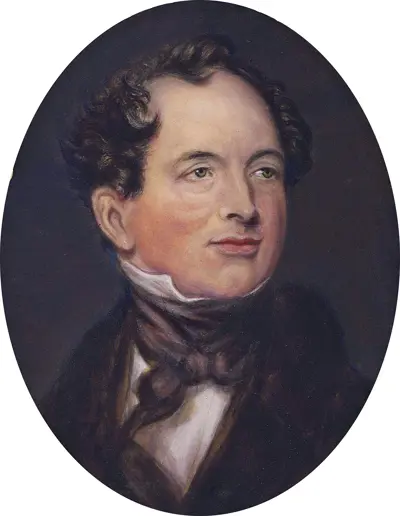
Thomas Moore was an Irish writer, poet and lyricist celebrated for his Irish Melodies. Their setting of English-language verse to old Irish tunes marked the transition in popular Irish culture from Irish to English. Politically, Moore was recognised in England as a press, or "squib", writer for the aristocratic Whigs; in Ireland he was accounted a Catholic patriot. Married to a Protestant actress and hailed as "Anacreon Moore" after the classical Greek composer of drinking songs and erotic verse, Moore did not profess religious piety. Yet in the controversies that surrounded Catholic Emancipation Moore was seen to defend the tradition of the Church in Ireland against both evangelising Protestants and uncompromising lay Catholics. Longer prose works reveal more radical sympathies. The Life and Death of Lord Edward Fitzgerald depicts the United Irish leader as a martyr in the cause of democratic reform. Complementing Maria Edgeworth's Castle Rackrent, Memoirs of Captain Rock is a saga, not of Anglo-Irish landowners, but of their exhausted tenants driven to the semi-insurrection of "Whiteboyism". Today, however, Moore is remembered almost alone either for his Irish Melodies (typically "The Minstrel Boy" and "The Last Rose of Summer") or, less generously, for the role he is thought to have played in the loss of the memoirs of his friend Lord Byron.
