Walter Mills Quotes
This really vital and sensitive military installation has been wrecked – more thoroughly than any Soviet saboteur could have dreamed of doing it… [through] the process of witch-hunting, sheer bigotry, cowardice, race prejudice and sheer incompetence.
Walter Millis, Historian & Columnist, Reported in column
Sourced by: Eigen's Political and Historical Quotations

Testifying for air power proponent General Billy Mitchell at his court martial, the Congressman described the quality of Mitchell's superiors:

Elements of the Army lied to the family of the dead soldier and the media, and then tried to cover up the lies. Davis was one of the few Congressman who would castigate a scandal caused by the administration of his own party.


Webb was opposing the all volunteer army which became a reality despite his and others objections.

Rush ran the hospitals for the Revolutionary Army and talked to many officers and enlisted men, and also observed much of the British military practices.

While running for office he was trying to win the support of Republcian Conservatives who were very unhappyt with their percieved lack of progress in fighting ISIS. However, this was insulting to many military people--especiually since ISIS was being deprived of they sources of funding and oil trade, their leaders were being killed at a rapid rate, and they were losign most of their territory. After he won the Presidency, on the very night of his inaguration he then flip flopped and paraised the general leadship of the military. While most politicans had a certain degree of hypocricy, Trump could make totally contrdictory statements without any embarassment. See Quote 644331..


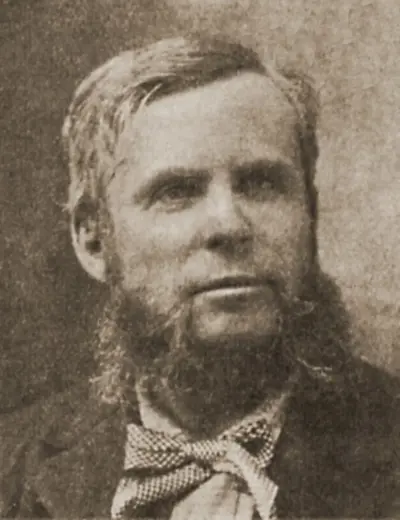
Walter Thomas Mills (1856–1942) was an American socialist activist, educator, lecturer, writer, and newspaper publisher. He is best remembered for the role he played in the Socialist Party of America during the first decade of the 20th Century as one of the leaders of the organization's moderate wing. He also was a key actor in the labor movement of New Zealand as a founder of the United Labour Party in 1912. He returned to the United States in 1914 with the advent of World War I and worked unsuccessfully to keep the country out of the bloody European conflict, eventually leaving the socialist movement in the 1920s.
