Jill Stein Quotes
This is another area in which savings can also be moved from wasteful - like the F-35 weapons system that will cost us $1.5 trillion by the time it's done and it's obsolete, you know, it's a weapons system - as well as this global military infrastructure, which is unlike anything the world has ever known at any time.
Stein, Jill. CNN Green Party Town Hall. Cable News Network, 17 Aug. 2016.


Clark had commanded the American and NATO forces in the Serbian War where all the military and political objectives were accomplished with heavy losses to the Serbian’s and none to the allied side—what many think was the most successful war in American History. Like Eisenhower in WWII one great challenge was the political and strategic one of keeping the coalition of all the allied governments working together. His perspective had been like Eisenhower and other officers in history was much wider and geopolitical than most military officers.

The congressman, a member of the House Armed Services Committee, had the most unusual view that no base closing was ever cost effective. His reasoning was that the base so contributed to the economic welfare of the congressional district in which it was located, that even if it contributed nothing to the military effort, it was still worth keeping it operational.


Japan was a militarist aggressive state when they started WWII in the Pacific. Their military brutalized China and almost every other country in Asia committing atrocities that those nations still are bitter about today. The unconditional surrender required that their new Constitution prohibit a military. However some of the Conservatives like Abe do not believe that Japan should be the only nation denied a military. Most of the rest of Asia even resents and fears the defense forces that they have and would seriously oppose a reestablishment of a military.


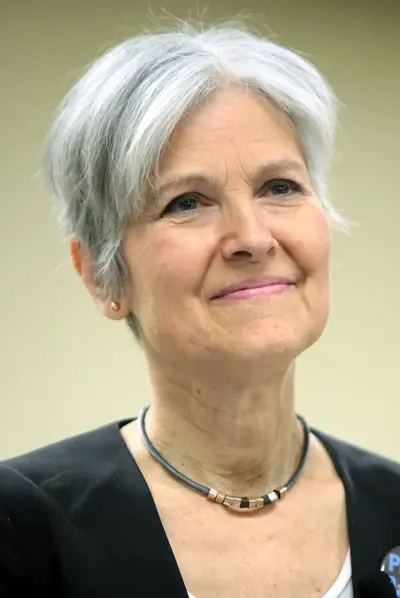
Jill Ellen Stein is an American physician, activist, and former political candidate. She was the Green Party's nominee for President of the United States in the 2012 and 2016 elections and the Green-Rainbow Party's candidate for governor of Massachusetts in 2002 and 2010. During her campaigns for President, she campaigned on the theme of a Green New Deal which included a number of reforms to address climate change, income inequality as well as civil and political rights reform. In 2012, Stein was on the ballot in 37 states and received 469,501 votes (0.36% of the popular vote). In 2016, she was on the ballot in 45 states and received 1,457,216 votes and 1.07% of the popular vote.
