Jorge Luis Borges Quotes
This is a confederacy without precedent: a generous adventure by men of different bloodlines whose aim is not to preserve in their lineages but to forget those lineages in the end; these are bloodlines that seek the night. The criollo is one of the confederates. The criollo, who was responsible for creating the nation as such, has now chosen to be one among many.
Jorge Luis Borges, 1899-1986, Argentinean Poet and Novelist, Description of the Ethnic Composition of Argentina, Speech 1928
Sourced by: Eigen's Political and Historical Quotations


Most immigration reformers want to open immigration more widely. Ward wanted immigration restricted to certain ethnicities and limited. He wanted a uniformity of assimilation and not diversity.


In revolutionary America, not only were the colonists divided into revolutionists and loyalists to Britain, but among the revolutionists, there was no uniformity of manners, ideas, norms, beliefs or any other element of politics and unity. The great challenge to America and one of its great strengths is its diversity which is not a consequence of recent immigration, but has been a characteristic of the American body politic even in the Revolutionary War. Even English was not spoken by everyone as there were French, German, Scandinavian and other immigrants who had settled in the frontier and rarely came into contact with people other than those of their own family and community. The notion of a specific American culture to which which some today believe that we should return, never existed to begin with.


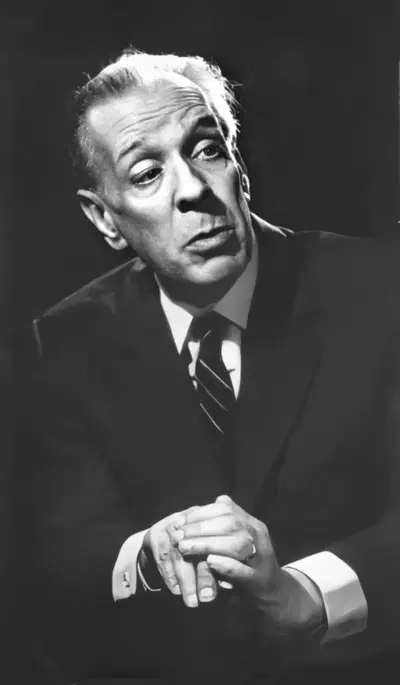
Jorge Francisco Isidoro Luis Borges Acevedo was an Argentine short-story writer, essayist, poet and translator, and a key figure in Spanish-language and universal literature. His best-known books, Ficciones (Fictions) and El Aleph (The Aleph), published in the 1940s, are compilations of short stories interconnected by common themes, including dreams, labyrinths, philosophers, libraries, mirrors, fictional writers, and mythology. Borges' works have contributed to philosophical literature and the fantasy genre, and have been considered by some critics to mark the beginning of the magic realist movement in 20th century Latin American literature. His late poems converse with such cultural figures as Spinoza, Camões, and Virgil.
