Muhammad Quotes
They will not fight you all except within fortified cities or from behind walls…
There are many who claim that the Prophet was the originator of the tactic of the Iraqis of fighting an insurgency war from within the cities. This quotation is citied. Many Iraqi insurgents believe that they are following the dictates of the Prophet.
Muhammad, 571-632, Prophet and Founder of Islam, Hadith, Al-Hashr: 14
Sourced by: Eigen's Political and Historical Quotations

Although jihad was a duty of Muslims, it was not a duty to die in a fight against overwhelming odds which was determined to be 2 to 1. So 2 Muslims could run from 4 but not 3.

“Amir” was the Arabic term for the commanding general or admiral. This is an important quotation as it shows that the ethics of war for the Muslims allowed guerilla warfare and formal pitched battles. Most Christians looked down upon guerilla warfare at the time.
The Muslims had internal wars but they had—and still have--two sets of morality as to the laws of war. This illustrates the classic Islamic discrimination against non-believers to which the minority of Muslim terrorists still adhere,


Martel’s strategy was to allow the Saracen invaders to take a few towns and accumulate plenty of booty. This would slow them down as an army, and many of the individual soldiers was carrying looted goods of one kind or another.
This is the first mention of a flame thrower in the history of warfare. The ancient Greeks had developed “Greek Fire” which was a type of naphtha tar that could be launched with a sling or trebuchet at enemy ships, but they never developed both the liquid form and the pumping and pressure device to send it over a distance. But apparently the Byzantines did develop the technology. However, it was likely that it was almost as much danger to the Byzantines who manned the equipment as it was to the enemy against whom they used it. However, they were not able to deploy enough of the weapons to have made a material difference in the outcome of any large battles as none of the military leaders and observers made any significant mention of it.

The “adversary” was Pakistan, which was frequently sending military and terrorist attacks into Kashmire much if which has been disputed by Pakistan ever since the Partition of India in 1949. India had a very disciplined and well led military and like most sophisticated military powers did not immediately retaliate for military incursions despite the public pressure to do so. Instead they gave themselves time to plan and organize the logistics for a series of surgical strikes at the terrorist and/or military concentrations Pakistan had deployed close to the border which they launched several days later.


He was arguing for a preemptive attack rather than wait to be attacked.

Despite the Muslim perception of the role of women, Tamerlane’s nomadic tradition had women warriors and he used them to guard the camp and freed up the men.


The “area” was Chechnya, a province of Russia with a substantial Muslim population. Islamic forces were not as unhappy in the Russian Communist days in the Christian Orthodox church was subdued, but after the fall of Communism, the Russian Orthodox church had a revival, and that exacerbated all the independence aspirations that existed for years in Chechnya.

to seek death, also istishhad to become a shaheed

The militant Muslim Fundamentalists with funds from Saudi Arabia created a series of madrassas schools throughout Pakistan; these provided not only a free education but food and often health care as well—in a country where the government did little for the average person. The militants employed gun runners and other smugglers, terrorists, money launderers, printers and publishers, and people in all walks of life.

Egypt was miserably governed by the Ottoman Turks. The people had no rights or freedoms and poverty and ignorance was universal. Napoleon, came to Egypt in much the same way as the United States did in Iraq two centuries later—with the assumption that bringing freedom and affluence, modern government, and a greater expectation of standard of living would find favor with most of the downtrodden inhabitants. However, although the Egyptians hated their status quo, it was culturally something they were comfortable with. It was Islamic and not Christian or secular as much of France was. Yet occupation by these foreigners was more onerous culturally than occupation by the Islamic Ottoman Turks.

This appeal was to the Sunni Muslims to join in the war against the Shiite Muslims and the Americans. While there have been very few rapes by American forces in the Iraq war there have been some of Sunnis against Shiite women and vice versa. Sexual defiling is such an emotive concept for Iraqi Muslims, that the few cases there have been were propaganda fodder. Note the use of the term “Crusader” to designate Christians. They are still living in world of a thousand years ago.

He was convicted and jailed for inciting violence. After serving a few years, he was deported to Jamaica. He then went to Africa to preach and was expelled from several countries there.

After years of minority Sunni Muslim rule of Iraq, the U. S. invasion gave the majority Shiite Muslims political control. The Sunnis and Shiites have been at each others throats for centuries despite the fact that they are both Muslims. Saudi Arabia is the center of Sunni Islam and many of its religious extremists issue edicts advocating the suicide bombing of Shiite mosques and other facilities and assuring martyrdom for the suicide bombers.

The key security organizations of the Pakistan government had large numbers of radical Islamicists with great sympathy and close ties with the Islamic terrorists.
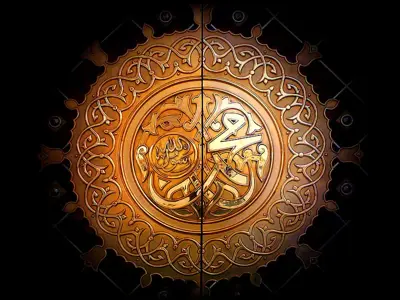
Muhammad was an Arab religious, social, and political leader and the founder of Islam. According to Islamic doctrine, he was a prophet, sent to preach and confirm the monotheistic teachings of Adam, Abraham, Moses, Jesus, and other prophets. He is believed to be the final prophet of God in all the main branches of Islam, though some modern denominations diverge from this belief. Muhammad united Arabia into a single Muslim polity, with the Quran as well as his teachings and practices forming the basis of Islamic religious belief.
