William Livingston Quotes
They had themselves suffered little, if at all, from the English government. Under it, they had prospered and multiplied. It required of this part of people great intrepidity, wisdom, and generosity to join their cause men already stigmatized as rebels.
Amazingly, a critical mass of Middle Atlantic citizens, joined in a vision of independence and persuaded their colonies to make common cause with the other colonies to gain independence from England and an end to monarchy. In a way, they had the most to lose and the least to gain from the revolution. Led by Livingston, John Jay, Alexander Hamilton, and Benjamin Franklin and others, these states had the greatest intellectual commitment to the Revolution as they would not financially benefit and would likely lose economically.
William Livingston, 1723-1790, Governor of New Jersey, Member of the First and Second Continental Congress, Explanation of the Loyalty instincts of the citizens of the Middle Atlantic Colonies—New York, Jersey, and Pennsylvania, Memoirs, 1813
Sourced by: Eigen's Political and Historical Quotations

Of the 13 colonies, the 3 Middle Atlantic States, were the least enthusiastic about an armed revolution against England. Jersey—Now New Jersey—was the most recalcitrant then with Benjamin Franklin’s son as Governor. See {634108} for an explanation of why that was.


Song traditionally sung at the end of British Labour Party meetings

Beaumarchais had provided the Americans with credit in the amount of ½ million French Livres. However, Beaumarchais served the French King Louis XVI as a spy and advisor on foreign affairs. The money had been secretly provided by the French government to help the American cause while still being able to officially deny to England that they were in any way involved in the rebellion. The American agent, Silas Dean, who arranged for the loan saw through the ruse. See {624186} and {624184}.

Most Canadians supported the English despite the letter.


Joseph Addison had earlier written of such a situation. Recent research has strongly suggested that Hale may never have said these words. The American patriots wanted to have heroes and may not have been too worried about the documentation and historical research. See {621112}


Mad Anthony Wayne. The quotation may be apocryphal, as solid, multiple confirmation has never been found.

While Adams was a little hyperbolic in his claim, the vast majority of the colonists who were protesting British policy and administration in 1775 were seeking reform, not separation from England. But what a difference a year made! British reaction radically changed the objectives of most colonists. See George Washington {613171} for a similar view.

Clark had Hancock and Adams for dinner. Paul Revere arrived to announce that “the British are coming.” The guests asked Reverend Clark if he thought that the people of Lexington would fight. They did, and some died.


He was ill and was transferred from jail to a hospital where he was murdered by Bolshevik sailors.

The America First Committee consisted of right wing Americans who admired the fascist states of Nazi Germany and Italy. They were very anti-English and wanted the USA to have an alliance with Hitler against England and above all to not support England in the Second World War. Once Hitler declared war on the United States, the absurdity and danger of the American First groups became clear. A few changed their minds, but most remained ultra right wing fascists. They were a public group and under surveillance by the FBI so they never participated in any sabotage or successful spying for the enemy. Ironically, the organization with the most patriotic sounding name was so disloyal and in support of those who warred on America. Great Britain had an equivalent organization arguing for England to support Germany and let Hitler control Europe.


during and after the American Revolution

3rd Earl Russell of Kingston


The crackdown on Boston which was intended to set an example and intimidate all of the other colonies backfired, and the British were told about it by their own officials in America. But they were so rigid and ideological about monarchy, that the stimulated rebellion rather than suppress them.

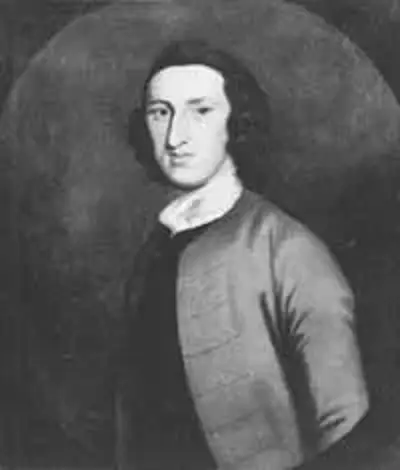
- Born: November 30, 1723
- Died: July 25, 1790
- Nationality:
- Profession:
William Livingston was an American politician who served as the Governor of New Jersey (1776–1790) during the American Revolutionary War and was a signer of the United States Constitution.
