Clifford R. Hope Quotes
These [food] surpluses can be made a far more potent means of combating the spread of Communism than the hydrogen bomb.
Clifford R. Hope, 1893-1970, U. S. Congressman (Republican, KS), House Debate, June 15, 1954
Sourced by: Eigen's Political and Historical Quotations

The British suspected that the Turks of Anatolia were complicit with Bolshevism

Most American policy makers have believed that food should not by used as a weapon on moral and humitarian grounds. Butz was an ultra-conservative who were among the few that were willing to use food to achieve political opbjectives even it it meant starving people in other countries.


In retrospect, the Marshall plan was so successful that most people forget or never knew that there was much domestic and foreign opposition and criticism. See {615799}.


All of Europe and the US and the other industrial democracies wanted South Africa to end apartheid and allow majority rule. Many had imposed strong economic sanctions upon the Apartheid nation. Botha, and most of the other Afrikaners, believed that Nelson Mandala and the Blacks were all communists or under the control of the communists, and that ending apartheid would turn South Africa into a Communist Country. Of course that was a paranoid fantasy as all movements for racial or ethnic equality are accused of being communists just as in the American South. When majority rule finally came to South Africa, it showed just how wrong the Afrikaners were as there has been a small communist movement in South Africa which has like the Italian communists functioned but had very little power or influence.


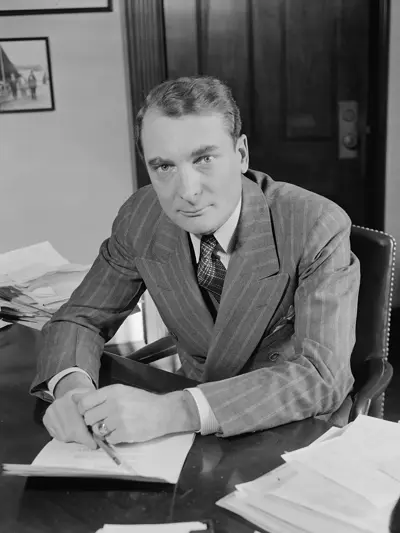
Clifford Ragsdale Hope was a U.S. Representative from Kansas, and a member of the Republican Party. Born in Birmingham, Iowa, Hope attended public schools and Nebraska Wesleyan University, in Lincoln, Nebraska. He served during the First World War, as a second lieutenant. He served in the Kansas House of Representatives. He was elected to the Seventieth United States Congress in 1927 and served in Congress through 1957.
