Wadada Leo Smith Quotes
There's nothing unnatural in creation.
Smith, Wadada Leo. Notes (8 Pieces): Source a New World Music: Creative Music. Leo Smith, 1973.


Watchtower Bible and Tract Society of New York


This is a very important historical quotation regarding the conflict between Science and Religion. What this quotation shows it that the accusation that the study of science undermined religious belief was a common accusation in the 17th century as well as today. Here Boyle gives the best argument against the accusation, However, despite the fact that this then seemed to be an irrefutable argument and it seems so today even, the accusation is continuously made with small fundamentalist religious factions attempting to reduce the influence of science on society.

The religious theology of the Church of England had accepted the fact based on Newton’s work, that the heavenly bodies followed a set of scientific laws that were themselves created by God. However, the Church could not accept the same principle when it came to the different species of humans and lower order animals. Each species they believe was created with all its characteristics by God directly and species could not change, develop, regress, go extinct unless God specifically ordained that. It was this inconsistency that Darwin was afraid would produce religious attacks on him and his notions of natural selection while astronomy and physics was treated very different theologically. Darwin delayed publishing his findings for 25 years hoping to find a religious atmosphere that would treat biology much as physics and astronomy. It didn’t come and finally he published and took the heat, which actually was not very great. With the exception of some religious fundamentalists, most other elements of society welcomed and supported Darwin’s ideas which today we realize were among the most important ever put forth in the world of science.


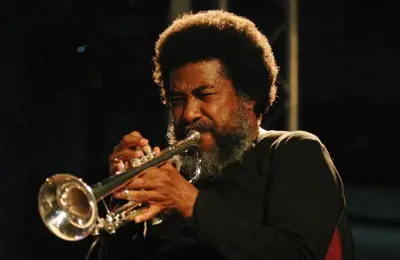
Ishmael Wadada Leo Smith is an American trumpeter and composer, working primarily in the fields of avant-garde jazz and free improvisation. He was one of three finalists for the 2013 Pulitzer Prize for Music for Ten Freedom Summers, released on May 22, 2012.
