Khaled Hosseini Quotes
There's no excuse for the macro corruption, but Afghanistan was always an informal society with a weak central government.
Hosseini, Khaled. Interview.

What was remarkable was that all the Defense Department and military witnesses agreed with Lynch on this point.


Editorializing on Daniel D. Rostenkowski, U. S. Congressman (Democrat, IL) and Chairman of the House Ways and Means Committee:


Many government officials realized this, but soft pedaled the information lest the American public's negative reaction might have been to reduce or cut off support to the American effort to stabilize and protect Afghanistan from the Taliban, Islamic, Fundamentalist, Extremist Terrorists. They chose what they believed to be the lesser of two evils. If the Taliban could be defeated, then attention might be turned to reforming the government and getting rid of Karzai. Others that that was a great mistake and Karzai should be deposed first, because as long as the corruption permeated the entire Afghan government, the population would never support a government and fight to get rid of the Taliban.

As a candidate for the Republican Presidential Nomination, Trump was very forthright about the fact that when he was a business tycoon, he gave money to many politicians not for any ideological reasons but he considered the money an investment which paid off handsomely. Almost all large campaign donors believe that they are making an investment and most have continued to be satisfied with the results so they continue to donate. See {583282} as an example of Trump's candid view.

Greeley, one of the most powerful and influential newspaper Editors of his day was always bitter that he did not get a patronage job. Newspapers did not make much money then and patronage and cronyism was even more rife than in modern times.


Smith had written to most of the then likely Presidential candidates of both major parties asking for their position on the Mormons who were facing persecution wherever they went. None of the politicians would make and satisfactory commitments. Smith took Direct Action and became the only major religious official to have run for the Presidency of the United States until Pat Robertson tried and failed in 2000. Smith’s assassination shortly thereafter cut his run for the Presidency short before it made much headway and politically he had no chance to affect the race.


His foundation is trying to improve development and health in much of the world and he was remarking on how difficult it is if the local government is not attuned to it and supportive.


TR won the Nobel Peace prize for mediating between Czarist Russia and the Japanese both of which believed he thought well of them.

The United States had just ousted the popularly elected leader Patrice Lumumba {640611}, and backed Mobuto. Lumumba was an idealist who was not corrupt at all, but were not so sure about our new protégé. Sadly he turned out to be one of the worst kleptocrats of all time, and he stole with more United States money than we gave to many nations in toto. Many believe that one of the reasons, corruption of our “allied” leaders was so bad lies in the wording of this cable. Note that to the State Department writers there was “normal” corruption as opposed to excessive corruption. Once that view is taken there is a constant battle to determine whether each new act of corruption is “normal “ or not, and corruption is simply lessened by pushing back against the most abnormal schemes. These critics advocate a zero tolerance for corruption especially with United States AID money. The State Department has been ambivalent and have often used the corruption system to bribe leaders to obtain national objectives.


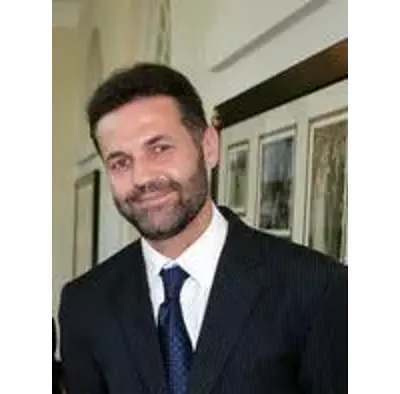
Khaled Hosseini is an Afghan-American novelist, physician, activist, humanitarian, and UNHCR goodwill ambassador. His debut novel The Kite Runner (2003) was a critical and commercial success; the book, as well as his subsequent novels, have all been at least partially set in Afghanistan and has featured an Afghan as the protagonist.
