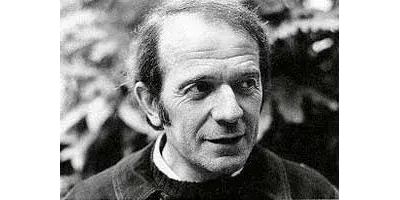
Gilles Deleuze Quotes


There’s no democratic state that’s not compromised to the very core by its part in generating human misery.


Citations

Deleuze, Gilles. Negotiations, 1972-1990. Translated by Martin Joughin, Columbia University Press, 1995, p. 173.

Related Quotes

Many of the Americans captured by the Islamic Barbary pirates in the years leading up to the Barbary War were sold into slavery. Eaton, who was the American consul at Tunis, couldn’t help but notice the tragic parallel between the suffering of those captured by the pirates and slaves in the American South.


And the children? Twelve hours of work for children! 0, misery. But not all the Jules Simon of the Academy of Moral and Political Science, not all the Germanys of Jesuitism, could have invented a vice more degrading to the intelligence of the children, more corrupting of their instincts, more destructive of their organism than work in the vitiated atmosphere of the capitalist factory. work began at five o'clock in the morning and ended at eight o’clock in the evening, summer and winter. It was a sight to watch them arrive each morning into the city and depart each evening. Among them were a multitude of women, pale, often walking bare-footed through the mud, and who for lack of umbrellas when the rain or snow fell, wore their aprons or skirts turned up over their heads. There was a still larger number of young children, equally dirty, equally pale, covered with rags, greasy from the machine oil which drops on them while they work. They were better protected from the rain because their clothes shed water; but unlike the women just mentioned, they did not carry their day’s provisions in a basket, but they carried in their hands or hid under their clothing as best they might, the morsel of bread which must serve them as food until time for them to return home. Thus to the strain of an insufferably long day – at least fifteen hours – is added for these wretches the fatigue of the painful daily journeys. Consequently they reach home overwhelmed by the need of sleep, and next day they rise before they are completely rested in order to reach the factory by the opening time.


This report and others like it eventually led to French labor reforms, but only many years later.


Gilles Deleuze
Gilles Deleuze
  • Born: January 18, 1925
  • Died: November 4, 1995
  • Nationality:
  • Profession:

Gilles Deleuze was a French philosopher who, from the early 1950s until his death in 1995, wrote on philosophy, literature, film, and fine art. His most popular works were the two volumes of Capitalism and Schizophrenia: Anti-Oedipus (1972) and A Thousand Plateaus (1980), both co-written with psychoanalyst Félix Guattari. His metaphysical treatise Difference and Repetition (1968) is considered by many scholars to be his magnum opus. An important part of Deleuze's oeuvre is devoted to the reading of other philosophers: the Stoics, Leibniz, Hume, Kant, Nietzsche, and Bergson, with particular influence derived from Spinoza. A. W. Moore, citing Bernard Williams's criteria for a great thinker, ranks Deleuze among the "greatest philosophers". Although he once characterized himself as a "pure metaphysician", his work has influenced a variety of disciplines across the humanities, including philosophy, art, and literary theory, as well as movements such as post-structuralism and postmodernism.