Amartya Sen Quotes
There's absolutely no reason why at the level of basic schooling that there should be any inequity whatsoever. And [that's] the first direction to go, [but] that need not prevent you from doing all the other equalities that you want.
Sen, Amartya. "Amartya Sen: Education for All." Asia Society.


As hard as it is for us to imagine today, while her husband was President of the United States, the First Lady wrote a nationally syndicated newspaper column every single day with politics frequently the subject. While she usually agreed with the President, there were occasions where they seemed to not see things exactly the same. She tended to be more liberal than he. However, there were those who believed that when she criticized politicians, it was with FDR’s knowledge and blessing and she sometimes did his “dirty work.” Eleanor Roosevelt was one of the most influential people in the country—certainly more-so than any First Lady before and since.


The Prime Minister had begun his career as a proponent of apartheid, but by 1990 had reversed course.


Rhode Island was known for its religious tolerance since the founders left Massachusetts after being persecuted by the Puritans. However, this was a remarkable policy for its time. Brown was a Baptist school and the President was a Baptist Minister, yet other Protestant denominations, Catholics, Jews were all welcome to attend. The toleration however did not extend to atheists. See {82626} .
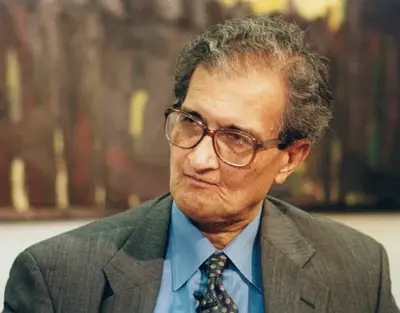
Amartya Kumar Sen CH is an Indian economist and philosopher, who since 1972 has taught and worked in the United Kingdom and the United States. Sen has made contributions to welfare economics, social choice theory, economic and social justice, economic theories of famines, decision theory, development economics, public health, and measures of well-being of countries.
