Xunzi Quotes
Therefore, a person should first be changed by a teacher's instructions, and guided by principles of ritual. Only then can he observe the rules of courtesy and humility, obey the conventions and rules of society, and achieve order.
Xunzi. Xunzi: A Translation and Study of the Complete Works, Volume III, Books 17-32. Translated by John Knoblock, Stanford University Press, 1994, p. 151.


originally in Spanish


The speech was in the midst of a very bitter strike where goons and strikebreakers assaulted miners and a few miners resorted to violence.


There was a social custom amongst the wealthy women of early American society where if they were moving to a new town, they would present their cards to the established female residents, who would then visit the newcomer at her home. Dolley Madison, anxious to bring some social civilization to Washington, still a rough swamp area, went out of her way to visit all comers and the Cabinet (Department) wives then did the same. However, as the government and Washington grew, this became more and more difficult, and subsequent first ladies wanted more of their privacy and time devoted to family. See {620647} for more.


Meiji the Great. This quotation is an excellent example of the subtle complexities of Japanese reforms. The Emperor was doing something unheard of—sharing his teachings with all subjects so that all Japanese can equally benefit. But at the same time the subjects were not expected to consider this as advice or as a possible religious or moral way of life for them. All were expected to adopt what the Divine Emperor was sharing with them. The concept of equality advanced; individuality and freedom receded.


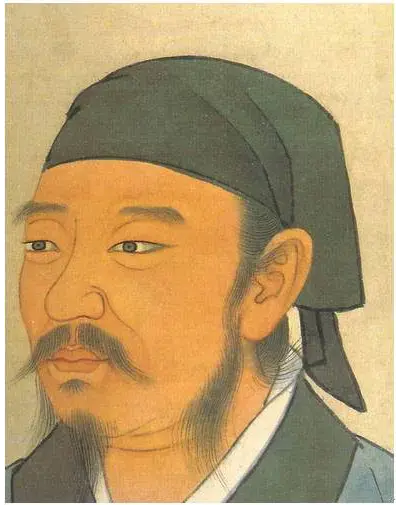
Xunzi (c. 310 – c. after 238 BCE), born Xun Kuang , was a Chinese philosopher of Confucianism during the late Warring States period. After his predecessors Confucius and Mencius, Xunzi is often ranked as the third great Confucian philosopher of antiquity. By his time, Confucianism had suffered considerable criticism from Daoist and Mohist thinkers, and Xunzi is traditionally regarded as a synthesizer of these traditions with earlier Confucian thought. The result was a thorough and cohesive revision of Confucianism, which was crucial to the philosophy's ability to flourish in the Han dynasty and throughout the later history of East Asia. His works were compiled in the eponymous Xunzi, and survive in excellent condition. Unlike other ancient compilations, his authorship of these texts is generally secure, though it is likely that Western Han dynasty historian Liu Xiang organized them into their present form centuries after Xunzi's death.
