Henry Honychurch Gorringe Quotes
There was no other course than open defense of the law, which the circumstances fully justified; and I determined to make the voyage from Alexandria (Egypt) to New York without registering the nationality; thereby taking the risk of having my steamer seized by any vessel of war at sea or by the authorities of any port I might be obliged to touch at.
The Khedive of Egypt trying to raise more money, at the opening of the Suez Canal in 1869 had agreed to sell one of the two great Alexandrian obelisks (“Cleopatra’s Needles”)—one was paid for by British troops (who had defeated Napoleon in Egypt) It stands today at London’s Thames Embankment. The other was sold to New York World Publisher William Hurlburt, who together with Railroad Baron William Vanderbilt, the New York City political and social establishment and the intellectuals of America had obtained the permission of the Central Park designers for one of the few external structures therein. Gorringe was hired by the American ad hoc group to see to the transfer, then thought to be a massively difficult feat of engineering. With cooperation of Engineers the world over, including Brooklyn Bridge Designers Roebling—who built a special crane system and sent it to Egypt—the technology was accomplished but the politics and bureaucracy endangered the project on almost all fronts. At one extreme, were some local NY Merchants who, in effect, didn’t want to risk moving a structure of this weight—220 ton, 69 feet tall—through the streets of New York containing then the world’s most sophisticated infrastructure to the International Law of the Seas and the existence of marine insurance cartels who in consort attempted to extort totally unreasonable shipping insurance fees. But American law did not allow a U. S. Flag vessel to operate without insurance. The Egyptians sold the project an older ship and registered it and passed special legislation allowing it to operate for this single purpose without insurance, however, at the last minute, the Egyptian Government did not want their foreign debt holders to know that the nation was selling such a treasure—any nation, attempting to protect the economic right of it’s creditors might have the ship seized at sea and hauled into a local bankruptcy court. Gorringe and most American politicians took the view that there was no then practical and legal route open, so they shipped under no flag at all thereby flouting American and International Law. Of course, the real lasting legal issue of who had the rights to buy and sell such national treasures which had originally been erected flanking the Cairo Temple of the Sun by Egyptian Pharaoh Tuthmosis III (1504 BC-1450 BC) and then moved to Alexandria by the occupying Romans seeking to deify Caesar—never really then was in dispute as it would be today, and may well be contested tomorrow like the British Museum Elgin Marbles.
Henry Honychurch Gorringe, 1841-1895, Naval Engineer & Anthropologist, Description of his approach to transferring the Great Obelisk: Cleopatra’s Needle from Alexandria, Egypt to New York City’s Central Park culminating with its placement and dedication January 22, 1881
Sourced by: Eigen's Political and Historical Quotations


Queen Victoria

Churchill was then First Lord of the Admiralty. The German sinking of the Lusitania indeed did provoke America into the war.

Commenting on a military coup in Suriname:


She was explaining the general American’s hostility toward diplomacy.


Charles Wilkes, a Union Navy Captain enforcing the naval blockade of the South, intercepted a British mail ship in the Caribbean and discovered two Confederate diplomats on board. He took them into custody to the cheers of Congress. England, however, was outraged that passengers—diplomats—on one of their ships was seized after boarding. This was technically an act of war. Abraham Lincoln, to the distress of many in Congress ordered the Confederate diplomats released explaining with this quotation.

Ethiopia was constructing on the Blue Nile, the biggest hydroelectric dam in Africa,. The water supply to Egypt is possibly likely to be somewhat reduced. Since Egypt’s 85 million people get 97 percent of their fresh water from the Nile, this has become a major issue in Egypt. Of course when Egypt constructed the Aswan Dam they, they were not concerned by any environmental effects it might have on other nations,

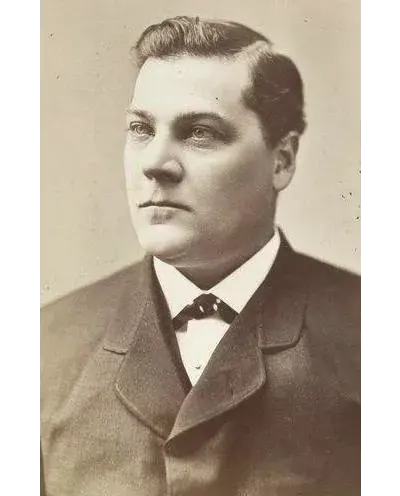
Henry Honychurch Gorringe was a United States naval officer who attained national acclaim for successfully completing the removal of Cleopatra's Needle from Alexandria, Egypt to Central Park in New York City.
