Navi Pillay Quotes
There seems to be a strong possibility that international humanitarian law has been violated, in a manner that could amount to war crimes.
Pillay, Navi. "Statement by UN High Commissioner for Human Rights Navi Pillay at the 21st Special Session of the Human Rights Council." Office of the United Nations High Commissioner for Human Rights, United Nations, 23 July 2014.


The Justice Department had sent a memorandum arguing that since Al Qaeda and other terrorist groups did not represent any state, were not signatories to the Geneva Conventions, and commonly committed atrocities in violation of the Geneva Conventions, then there was no obligation for America, or any signatory nation, to protect captives of these terrorist organizations. See {589866} for a contrary position that was taken.

The Justice Department and the White House were arguing that the Geneva Conventions did not apply to terrorist groups. See {589865}.

There has always been some confusion in the case of the Wars in Afghanistan and Iraq. The Geneva and Hague conventions are very clear when prisoners are official members of an state’s armed force with uniforms, insignia and ranks. It is also clear with respect to civilians. But the combatants of the insurgent and terrorist forces fall in between, and international law is less clear. The George W. Bush administration at first took the position that the captured combatants were not captured soldiers and were therefore not entitled to the treatment due that status. But the military regulations made no distinction as to how prisoners in combat should be treated. It is a very gray area, except that in either case, torture is illegal under U. S. and under International law.

This is true. There never has been any International law that made a belligerent responsible for civilian damages and deaths that were the result of collateral damage. However, the United States over the years, more so than any other country. Provided huge amount of aid to the citizens of the enemy nations although there was no legal obligation to do so.


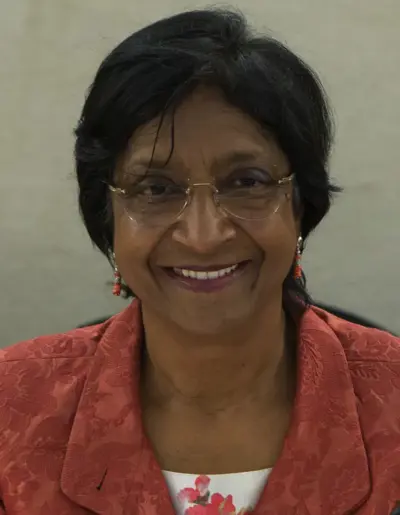
Navanethem "Navi" Pillay is a South African jurist who served as the United Nations High Commissioner for Human Rights from 2008 to 2014. A South African of Indian Tamil origin, she was the first non-white woman judge of the High Court of South Africa, and she has also served as a judge of the International Criminal Court and President of the International Criminal Tribunal for Rwanda. Her four-year term as High Commissioner for Human Rights began on 1 September 2008 and was extended an additional two years in 2012. She was succeeded in September 2014 by Prince Zeid bin Ra'ad. In April 2015 Pillay became the 16th Commissioner of the International Commission Against the Death Penalty. She is also one of the 25 leading figures on the Information and Democracy Commission launched by Reporters Without Borders.
