William Lamb, 2nd Viscount Melbourne Quotes
There is nothing which cannot be turned in an hostile and malignant a manner by malignant and perverted ingenuity.
2nd Viscount Melbourne
William Lamb, 1779-1848, British Prime Minister (Whig), Letter to Queen Victoria, November 27, 1839
Sourced by: Eigen's Political and Historical Quotations

Partisanship had reached a heated pitch like America at the beginning of the 21st century. Note that she used the term “violence” to describe verbal assaults. Joseph Hume was the leader of the Radical Party.


Personal attacks have been made in the Congress ever since that body first met. However, they were infrequent and raised concern when they were made. However, in the late 1980s, there was a series of personal attacks made across the political parties culminating in the resignation of Wright as the Speaker of the House. Some Republicans had objected to the failure to confirm John Tower as Defense Secretary because of his serious alcoholism problem which was made public, and in turn made public some of Wright’s indiscretions. From then on the personal invective and attacks increases and there was retaliation by both parties that went on for decades. At first it was exposures of real incidents but by the 21st century, the attacks were often fabricated. For example, Barack Obama was called a “Socialist Muslim” by Republicans. See {624107}


He was one of the very few American politicians who could truthfully make that statement.


Personal attacks have been made in the Congress ever since that body first met. However, they were infrequent and raised concern when they were made. However, in the late 1980s, there was a series of personal attacks made across the political parties culminating in the resignation of Wright as the Speaker of the House. Some Republicans had objected to the failure to confirm John Tower as Defense Secretary because of his serious alcoholism problem which was made public, and in turn made public some of Wright’s indiscretions. From then on the personal invective and attacks increases and there was retaliation by both parties that went on for decades. At first it was exposures of real incidents but by the 21st century, the attacks were often fabricated. For example, Barack Obama was called a “Socialist Muslim” by Republicans. See {624108}


His description of the extreme partisanship in England at the time could just as easily describe the American political polarization of 2012—85 years later.


The Presidential Campaigns of 2008 and 2012 shocked many Americans for the blatant lies that opponents of President Obama wrote and broadcast and then some of the retaliatory lies that Obama defenders responded with. However, this quotation from a 19th century political historian shows us that blatant lying in American politics is not at all new.

At the time political parties and some candidates had their own newspapers and attacked their opponents through those rather than directly themselves which would have been seen as gross and undignified, Slander and attacks have been a part of American politics since its inception. The degree and extent reached its pinnacle in the early 21st century.


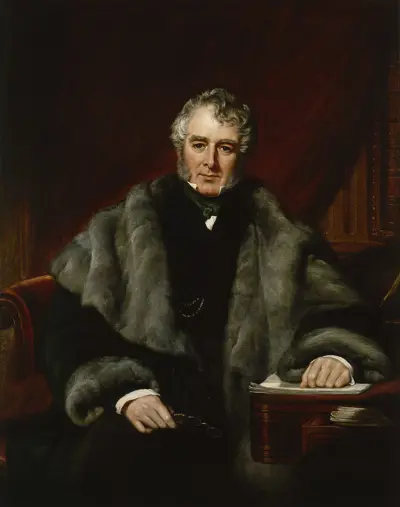
William Lamb, 2nd Viscount Melbourne, PC, PC (Ire), FRS, in some sources called Henry William Lamb, was a British Whig Home Secretary (1830–1834) and Prime Minister (1834 and 1835–1841). He is best known for being prime minister in Queen Victoria's early years and coaching her in the ways of politics, acting almost as her private secretary. Historians have concluded that Melbourne does not rank highly as a Prime Minister, for there were no great foreign wars or domestic issues to handle, he lacked major achievements, he enunciated no grand principles, and he was involved in several political scandals in the early years of Victoria's reign.
