Charles Horton Cooley Quotes
There is nothing less to our credit than our neglect of the foreigner and his children, unless it be the arrogance most of us betray when we set out to "Americanize" him.
At the time there was no social safety net for immigrants, Many would arrive, sicken, and die from lack of food or shelter and health care.
Charles Horton Cooley, 1864-1929, Sociologist, Human Nature and the Social Order, 1902
Sourced by: Eigen's Political and Historical Quotations


This quotation became a very polarizing stimulus in the country with anti-immigration people using it in support of their program to restrict immigration and with liberals and Hispanic groups who saw the quotation as a discriminatory unfounded charge.


He was also anti-Semitic and biased against most foreigners. Lindbergh, a great aviator, was a Fascist who was a great admirer and supporter of Hitler and Mussolini.


Most social and demographic changes many people fear will continue on a trend and assume the extrapolation will become reality. Few ever do, and the fears turn out to be just fears.

Bourne was one of the first writers with a national audience to question the classic but never real “melting pot” theory of immigration and suggest the “salad” model though he never used the term.
Most immigration reformers want to open immigration more widely. Ward wanted immigration restricted to certain ethnicities and limited. He wanted a uniformity of assimilation and not diversity.


Most people are very surprised that the great Benjamin Franklin was so narrow-minded at one point in his life. The German immigration almost halted during the Seven Years War, and the influx of Germans to Pennsylvania did not resume at the same rate.

He was agreeing with the Right Wing racist Dutch politician Geert Wilders that one of the dangers of immigration of different races and ethnicities is that their children would not be capable or able to contribute to America or in his view make America Great Again as it has been diminished by all these immiogrant babies of the last few generations. There are very few areas of civilization where America is not greater today than ever before.

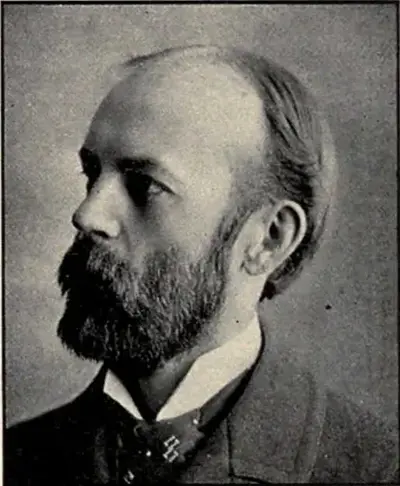
Charles Horton Cooley was an American sociologist and the son of Michigan Supreme Court Judge Thomas M. Cooley. He studied and went on to teach economics and sociology at the University of Michigan, was a founding member of the American Sociological Association in 1905 and became its eighth president in 1918. He is perhaps best known for his concept of the looking-glass self, which is the concept that a person's self grows out of society's interpersonal interactions and the perceptions of others. Cooley's health began to deteriorate in 1928. He was diagnosed with an unidentified form of cancer in March 1929 and died two months later.
